The Announcement

The deeply held moral and political convictions of both left-leaning and right-leaning politicians evaporated completely within five years after the first formal announcement. The announcement came at the conclusion of what became known as the “survival summit.”  A joint statement, signed by the heads of state of the 180 countries represented at the event, was distributed shortly after the summit.
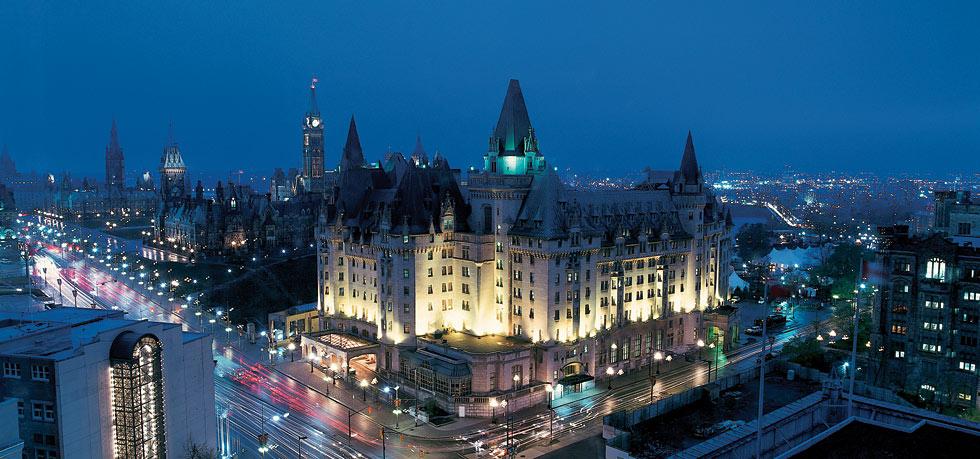
FairmontChateauLaurierBefore the signed statement, and within minutes of the closing gavel of the summit, the summit’s host, Canadian Prime Minister Cynthia Alburton, addressed the news media in the Ballroom of the Fairmont Château Laurier.  The Fairmont is an elegant hotel draped in a rich history, steeped in the institutions of Canadian government and high society.  Built in 1912, its immense spires and stately appearance exude pomp and tradition.

Despite its heritage and its pedigree, the Fairmont Château Laurier was, ultimately, simply an asset, as its sale  for $143 million in late 2013 illustrated.  Shania Johnson’s father, Turner Johnson, had purchased the hotel from Ivanhoé Cambridge, a real estate company that is a subsidiary of the pension fund Caisse du dépôt et placement du Québec.  It stayed in Turner Johnson’s hands until July 27, 2048, five years to the day after the summit concluded.

The Fairmont sits directly across Rideau Street from the Government of Canada Conference Centre, where the summit was held.  Rideau Street is six lanes.  In the middle of the street is a raised curb separating traffic going in opposite directions.

There is no crosswalk between the two buildings, so when the Prime Minister exited the front doors of the Conference Centre, her entourage had to escort her a half a block southwest to the crosswalk, where members of the Ottawa Police Service stopped traffic to allow her to cross.   Watching the procession from behind the glass front door of the Conference Centre, Clement Hotchkiss remarked to Maximilian Färber, “If the President of the United States wants to cross a street, he crosses the street.  He doesn’t go to an effing crosswalk.” Färber didn’t respond, but he remembered the comment later, when he made a relevant point to an American friend.

Prime Minister Alburton’s remarks had been written for her approval before the summit had officially ended, but after all the decisions had been made.  Once she signaled her approval, her assistant sent the approved text to the virtual teleprompter synched with the Prime Minister’s eyeglasses.  Though the technology was not new, Alburton remained in awe that she could read an entire speech simply by looking through her eyeglasses.  She stepped up to the dais, crossed over to the lecturn, looked at the assembled members of the media and began:

“Good afternoon. Thank you for your patience for the last four days.  The sensitivity of the subjects under discussion made it imperative that the participants have the freedom to speak frankly and honestly, without concern that their comments might be taken out of context and released prematurely.  It was for that reason, and that reason alone, that the media was not permitted to witness, nor to record, the meetings we have held this week.

“I was chosen, as head of state of the host country, to make these summary comments here today.

“We have known for generations that there is a limited supply of petroleum buried beneath the earth.  In response to that knowledge, governments and industry have made considerable headway in reducing our dependence on petroleum products and in finding alternative sources of energy and alternative components to the many products that rely on petroleum for their manufacture.

“However, during the last five years, earth scientists including geologists, seismologists, and others, have been increasingly worried that previous estimates about the levels of available petroleum reserves were overly optimistic. Within the last two years, especially, many of the world’s most prominent scientists have raised the alarm and called for taking emergency steps to avoid catastrophic collapse of energy supplies. More recently, as you will know from highly-publicized announcements by scientists around the globe, these concerns have grown louder and more intense

“In response to these increasingly urgent calls for action to address the crisis on the part of world governments, the leaders of 180 countries around the world, representing more than 98 percent of the world’s population, convened in Ottawa for the last four days to receive the latest reports from the scientific community and to consider what  must be done to avoid a collapse of supplies and the ensuing chaos that would bring.

“What we learned during these past few days is nothing short of mind-numbing.  While there is no reason for panic, there is reason for deep concern and immediate action.

“If the governments of the world…not just those of the large and prosperous countries but those of the smallest and least prosperous…do not take immediate action, we can expect our supplies of petroleum to essentially disappear within ten years.  Needless to say, that would spell the end to our way of life, so heavily dependent on petroleum for energy and on products that require petroleum.  Immediate and dramatic emergency steps are required to avoid that outcome.  The leaders gathered here this week have identified the steps required now and in the future to avert a catastrophe of truly global proportions.

“The first step is to implore every person, worldwide, to take whatever steps are possible, to avoid using petroleum products.  That means, today, do not drive your car unless it is absolutely critical.  Take mass transportation, if you can, or ride a bicycle or walk.  If you must drive, make every effort to combine needed travel into a single trip to minimize the use of petroleum products.  We are asking employers, worldwide, to take immediate steps to make it possible for their employees to work from home so they do not need to drive or even take public transportation.  Every drop of fuel we save will extend the available petroleum reserves.

“We must admit to ourselves that the shortage of petroleum is severe and permanent.   We cannot manufacture more.  We must acknowledge that fact and devote ourselves to finding other ways to supply ourselves with the energy and the products petroleum has heretofore provided.

“The leaders of the 180 nations gathered here this week have unanimously agreed to take the following steps immediately upon their return to their countries:

  1. Urge their citizens, as I am urging on their behalf in my message today, to immediately implement steps to drastically reduce their use of petroleum products;
  2. Convene their governing bodies to develop and implement, on an urgent basis, policies and laws that will codify the requirement that reliance on petroleum products be dramatically and permanently reduced;
  3. Take steps to significantly increase the financial burden on users of petroleum products and progressively increase that burden with increased use…this will penalize users who do not take steps to reduce consumption;
  4. Take whatever steps are necessary to enlist the support of business and industry to facilitate citizens’ reduced reliance on and use of petroleum products;
  5. Secure support, both political and financial, for an emergency global initiative, which we have dubbed “The Energy Collaborative,” to find and develop alternatives to petroleum.

“The Energy Collaborative will be a truly global effort which will bring together the best minds from every country on earth, with the objective of finding, selecting, and developing practical and readily achievable alternatives to petroleum within five years.

“The challenges we face are immense and will require considerable sacrifice worldwide, but the problems we face are not insoluble. We can and will do within the next five years that for which we have not heretofore had the political will.

“Although the crisis is severe and deeply troubling, it makes obvious to every world leader who participated in this historic summit that there is absolutely no room to allow for the continuation of wars and conflicts which sap our energy.  And there is no room to waste precious energy in products and processes that are superficial and contribute little to humankind., yet contribute significantly to pollution and global warning.  So, our efforts to resolve this crisis will undoubtedly have some positive results.  We expect to see a dramatic and immediate reduction in global conflicts.  We expect to see a cleaner planet.  And we expect, within five years, to have a solution to the crippling effects of a rapidly dwindling supply of petroleum.

“Again, thank you for your patience.  There will be no additional comments from the participants until they return to their home countries and address their own nations.”

As one would have expected, there was, indeed, panic at the Prime Minister’s announcement and subsequent announcements worldwide by the heads of state.  There was chaos in world economic markets.  The call to reduce consumption of petroleum products met with mixed success.  In countries like Sweden, whose population was already attuned to the need to minimize energy usage, the response was swift and positive.  But in Pakistan and Bolivia and Darfur and other struggling economies, there was rage, rage at being asked to sacrifice for the sins of rich countries which had reaped the rewards of cheap and plentiful energy but now were expecting the rest of the world, especially third-world nations, to forego their opportunities for prosperity.   There were some who questioned the legitimacy of the claims that petroleum supplies were running low, but they were greatly outnumbered.

In spite of Cynthia Alburton’s suggestion that the petroleum crisis would end violent conflict between nations and between factions within nations, conflict continued, albeit at a much reduced level.  Britain moved relatively quickly to cede ownership of the Falkland Islands to Argentina.  The few remaining U.S. troops in Mexico, North Korea, Chile, and Uraguay were withdrawn in a matter of months, though bases remained open and troops remained stationed in 101 other countries, including five in which the U.S. had been engaged in armed conflicts in one way or another.  The ETA separatists in Spain fell silent. Israel withdrew support for several settlement in the Gaza Strip.  And  Venezuela recalled its forces from Columbia. But little else changed.  Other conflicts were scaled back, but not eliminated. Beneath a tense calm there continued to smolder embers of violence that periodically flared into violent flames, only to be doused by threats from the military wing of the United Nations.

Only three months after The Announcement, the United Nations effectively absorbed the Energy Collaborative as the petroleum crisis had become its primary focus .  The UN’s peacekeeping force essentially became the military wing of the Energy Collaborative, as it was to be deployed only to curb conflicts where either petroleum supplies were threatened or significant petroleum wastage was likely due to conflict. There were early, and obvious, signs that the United Nations was morphing into a new World Government, but suggestions to that effect had long been ballyhooed in political conversations. Now, though, those who vehemently objected to such a thing were shouted down and treated as lunatics who didn’t understand what was at stake.

The U.S. followed the lead of Sweden in transportation policy.  The newly-elected Republican president, Shania Johnson, who only months earlier had decried the previous administration’s approach to governance as “big government gone awry,” changed her position on the role of the Federal government versus state governments.  She quickly signed into law a Republican-generated bill that required permits to purchase fossil fuel.  Permits were given only to those who could prove, to the satisfaction of the new Fuel Acquisition Administration, that fuel was needed for medically-necessary travel or for legitimate commercial purposes involving an economically-necessary business.  Trucking companies were among the first to get the permits, though only companies that transported food and medical supplies were given open-ended permits.  Others had to go through a laborious renewal process bi-annually.   Police departments, fire departments, and medical first-responders also were given permits, but only in connection with the use of official vehicles.  To discourage misuse, the Fuel Acquisition Administration promulgated rules concerning the types of emergency and non-emergency events for which responses in fossil-fueled vehicles were permitted.  Burglary calls, for example, were classified as “no-fuel response” events, so officers were permitted to respond to them only on bicycles or on foot.

[I may, or may not, continue writing this story. But I probably won’t post it here. If you’re really interested in reading it, please send me $1,258 in ones and fives. ]
Posted in Fiction | Leave a comment

Memory of Knives

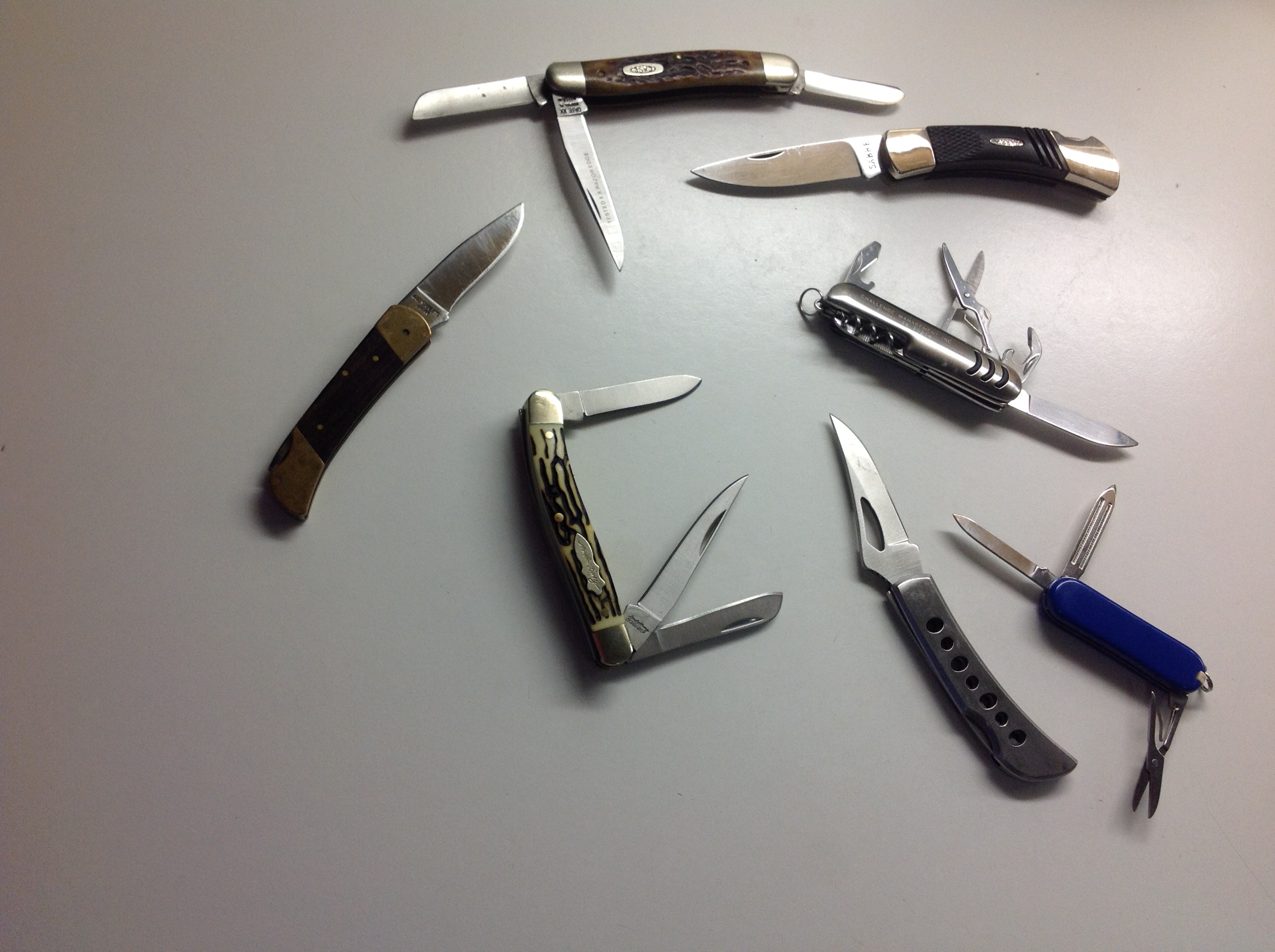
KnivesWhat is it about knives, especially pocket knives, that I find appealing? It has nothing to do with protection.  It has nothing to do with monetary value.  It doesn’t even have much to do with utility, beyond a few core functions.  What, then, intrigues me about them?  Why do I pause and gaze longingly at the collection when I pass a knife case in a hardware store?  What possesses me to treat the loss of a knife as if it were important, as if it were meaningful?  Questions, so many questions.  The answers do not flow as easily.

I think I carry a pocket knife because my father carried a knife.  It may not be quite that simple and straightforward, though.  I’m sure it has quite a lot to do with utility.  I use my pocket knife.  A lot.  There’s always a piece of rope to cut, a pencil to sharpen, a page to cut out of a magazine, a piece of tape to cut, a bit of paint on a freshly-painted window to scrape off. Utility has a lot to do with it.

But it started, I think, because my dad carried a knife.  He didn’t talk to me about his pocket knife.  He didn’t teach me that pocket knives are handy tools to carry around.  Well, he didn’t teach me in a didactic way.  But he taught me by example that knives are useful. And he always had a pocket knife with him.  He died years ago, but I remember he always had his knife with him.

My father’s pocket knives were small, almost pen-knife in size, generally just one or two blades.  Most of my knives are a bit larger, my favored style being the three-blade stockman knife, of which I now have two.  I have others (all shown in the photo above), but my favorite is the stockman.

When I lost my old Uncle Henry stockman to a hole in my pocket a few weeks ago, I felt naked. I hated that an old favorite was no longer with me.    Obviously, I had other knives, including a very nice Case stockman, but I wanted the old Uncle Henry back.  I picked up one of my old single-blade knives, one with an over-used and no-longer-functioning locking mechanism, so I had the requisite tool in my pocket (after the hole was repaired).  But I really missed the Uncle Henry.  And then, because the locking mechanism didn’t work, I bought another locking single-blade knife, all metal, to serve as my “everyday” knife for awhile.

Every pair of my jeans, which I haven’t worn since March because of the hot weather, have a badly-worn watch pocket where I kept the old Uncle Henry stockman.  The knife’s chiseled exterior wore down the denim quickly, making itself a nice, soft pouch in which to rest.

I missed my Uncle Henry!   So I went and bought one.  But I haven’t been carrying it.  It would break my heart to lose another one. Both my favorites, the Case and the Uncle Henry Stockman are safely put away.

That attitude drives me crazy; it’s like my mother’s, who refused to use her beautiful crystal wine glasses except for very special occasions “because they might get broken.” Since she died many years ago, I’ve made it a point to use those wine glasses as “everyday” wine glasses.  Until I lost that Uncle Henry, I treated my favorite knives the same way.  Maybe, when it’s “jeans weather” again, I’ll entrust my Uncle Henry and my Case stockman knives to the worn watch pockets.  Until then, though, I’ll keep a locking, single-blade knife in the pocket of my shorts.

Several of the knives I own are ones I’ll rarely, if ever, use.  Not because I treasure them and don’t want to use them, but because they’re not the kind of tools I find useful or helpful. I never use a pair of scissors that pops out of a knife.  I won’t often open a bottle of wine with a corkscrew that folds into the body of  a pocket knife. But, still, I won’t sell them or give them away.  Why not?  Because they’re knives.  They’re knives.

One doesn’t cast knives aside. Somehow, discarding a knife would dishonor my father. Maybe that’s what jolts me so much when I lose a treasured knife.

Posted in Family, Memories | 3 Comments

A Tragically Flawed Attempt at Brisket Chiles Rellenos

The plan was flawless.  I would take a proven recipe for good chiles rellenos and would make it even better with the addition of chopped brisket, left over from the whole brisket I smoked a few weeks ago and subsequently frozen.  What could go wrong?  Last night, I found out.

Well, to start, the “proven” recipe wasn’t proven by me.  It was a recipe I found online and, judging from the comments, was extraordinarily good.  And the recipe called for first charring and then stuffing fresh pasilla peppers.  Not recalling at the time I read the recipe that pasilla peppers are the dried version of chilaca peppers, I didn’t catch the first clue that the recipe was, from the outset, flawed.  When I went looking for chiles pasillas, I could only find them dried (for the reason that the ONLY way a chile is a pasilla is that it’s dried), so I opted to substitute chiles poblanos.

Assuming I’d have nice, plump chiles rellenos after stuffing and frying the chiles, I made the sauce to pour over them before preparing the chiles.  I boiled several roma tomatoes in water until I could easily slip off their skins, then continued to cook them as I added chopped garlic, chicken bouillon power, cumin, and salt.  Then, I made a roux with 2 tablespoons of flour and 2 tablespoons of flour; when it had browned, I dumped the tomato mixture into the roux pan and mixed it up.  It had the texture and the taste I wanted.  Success!

Things went horribly wrong, though, when I followed the instructions for charring the “pasilla” chiles.  The instructions called for putting the chiles under the broiler until all their skin were black and blistered, then removing them to a plastic bag to sweat,  removing the blistered skin, then slitting them to remove the seeds.

Well, after charring the chiles and letting them sweat, I pulled them out of the bag to peel the skin.  What I found was, as my sister once called her caviar pie, a “certifiable mess.”  My attempts to peel the peppers resulted in ripping their limp, wet flesh into thin, disconnected strips.  There was no “slitting them to remove the seeds.”  Impossible.  The seeds were oozing out of the slippery black and green mess.  It would have been impossible to stuff  chopped brisket and asadero cheese into these chiles, much less use a toothpick to keep them closed when I dipped them in batter and fried them.  There was no longer a chile to stuff.  My flawless plan fell into shreds along with the chiles.  But, did I give up?  Hell, no!  I quickly developed Plan B.

Plan B was this:

  1. coat the bottom of a glass casserole dish with oil;
  2. line the bottom of the dish with the limp, wet shreds of poblano peppers;
  3. top the peppers with a thick layer of chopped brisket;
  4. top the brisket with a heavy layer of asadero cheese;
  5. top the cheese with the tomato sauce;
  6. cover the casserole dish with foil and bake in a 350 degree oven for 20 minutes;
  7. remove the foil and cook for 10 minutes more;
  8. serve a perfect casserole.

The result was a wonderfully flavorful but decidedly imperfect, very soupy casserole.   By any measure, the dish I put on our plates was disastrously distant from the dish I intended to put on our plates.  But the flavor was so good, the spices so perfectly melded, the level of “heat” so right, that I will try again to make brisket-stuffed chiles rellenos.  I will do it differently, though.  I don’t know at this moment just how I will do it differently, but I will make some changes.  Next time, I will make chiles rellenos stuffed with brisket and asadero chese, instead of a layered poblano, brisket, asadero cheese, and tomato sauce soup.

Posted in Food | 1 Comment

Beer’s Calming Effect

This is one of two posts for today.  One is frivolous.  I’ll leave it to you to decide what the other is.

Yesterday’s beer haul (pun intended) included the following:

  • 512 Whiskey Double Pecan Porter, a porter (obviously);
  • Tilburgs Dutch Brown Ale (yes, a brown ale, again, obviously); and
  • Saint Arnold Lawnmower, a German style Kolsch.

Those beers brought the “count” of different beers I’ve tasted at the Flying Saucer to 79, just 121 short of the magical number of 200, at which I will be immortalized with a plate on the ceiling. Unless I work hard to damage my liver in short order, it’s unlikely I’ll reach that magic number before my wife and I sell our house and move out of Dallas. That’s a shame. Odd though it may seem, the pursuit of the plate by spending time at the Saucer with friends has been among the most enjoyable and rewarding times I’ve spent in Dallas.

Such is life, though. Time to move on and do something different. If the NSA weren’t reading every word I wrote, I might suggest we all try something truly revolutionary like ejecting all sitting legislative, executive, and judicial branch officials and replacing them with nonpartisans who truly value the concepts set forth in the Constitution. But, since NSA is reading, I won’t suggest anything like that. Instead, I’ll suggest we all simply sit back and behave like the slovenly curs we have become. Wait! This was supposed to be a happy, positive post! How did it go so badly off course?

All right.  Back to beer.  Beer is a happy liquid.  And that’s all I really need to say, isn’t it?

Posted in Beer, Friendship, Politics | 2 Comments

The Pope’s Children

I had an interesting conversation with one of my brothers last night.  He told me about a book he has just started to read, entitled The Pope’s Children: Irish Economic Triumph and the Rise of Ireland’s New Elite.

My brother, who had begun reading the book on the advice of our older brother, couldn’t say enough about how brilliantly funny and informative the book is.  So, after we spoke, I began looking for more information online.  I found a particularly interesting, but troubling, statement ascribed to the book’s inside flap:

“Named for the ironic coincidence of the Irish baby boom of the 1970s, which peaked nine months to the day after Pope John Paul II’s historic visit to Dublin, the Pope’s Children are overflowing with money, ambition and optimism—but they are also the most hedonistic, status-conscious and decadent Irish generation ever. They have abandoned the Old Irish Dream of Catholicism, nationalism and limited expectations in exchange for the New Irish Dream of instant gratification, material possessions and endless possibility.”

Immediately, I questioned whether I would have anything but disdain for the generation portrayed in the book.  The description of the generation describes, to me, a population whose personal ambitions override any sense of personal responsibility.  They describe, to me, people who posses a trait I like to call “conspicuous consumption on steroids.”

I suppose I tend toward the middle ground between the Old Irish Dream and the New Irish Dream.  Fortunately for me, I guess, I am neither Irish nor a member of the Pope’s Children.

Having not read the book, I probably shouldn’t pass judgment on either the book or the generation about whom it was written.  Maybe I’ll revisit the issue AFTER I read the book. I’d be curious to hear from others who may have read it.

Posted in Books | 2 Comments

Grain-Fed versus Grass-Fed: A Study in Confusion

I have tired of posting about “things that matter” and have decided that, today, I will post about “something that doesn’t matter.”  (Though, in fact, it does.)

And, so, I will expound on the relative merits of grass-fed beef versus grain-fed beef.  I know, it’s hard to reign in your excitement at this topic, so I’ll give you a moment to collect your thoughts and settle in to the concept.

All right, now that you’re ready to jump into the middle of this spellbinding conversation, I’ll begin.  For months, it actually may be a few years, I’ve been interested in comparing the flavor and texture of grass-fed beef to the stuff I always buy, grain-fed beef (otherwise known as not-grass-fed-beef).  My wife is a financial tyrant, so I have not been permitted to buy grass-fed beef, inasmuch as it is MUCH more expensive than the grain-fed variety.  However, she recently succumbed to my charms and relented; she allowed me to buy a grass-fed New York strip, weighing in at 0.9 pounds, for $14.99 plus tax.  And so we bought it.  We bought it at a farmers’ market near our house from a guy who says he produces nothing but grass-fed beef and, moreover, has a following of grass-fed beef aficionados all over north Texas.

A few days later, we bought another New York strip, this one the standard, everyday, grocery-store variety of beef fed on corn, other grain, and very probably huge amounts of growth hormones, MSG, tequila, and ground cow-parts deemed unsuitable for direct human consumption.  You know, the stuff we normally buy because it’s cheaper.

On Sunday night, we conducted the taste test.  I grilled the two steaks.  For the grass-fed beef, I followed the seller’s directions, which involved grilling it at a high temperature for a very short time to sear the meat, then cooking it for another brief period over a much cooler grill.  First, though, according to directions, I applied a light coating of olive oil to the beef. After grilling it on high, I moved it to the other side of the grill, which remained much cooler.

I cooked the other piece the way I normally do; I seared both sides over high heat, then lowered the heat just slightly and watched the meat until it was done to a level of done-ness that suits my wife, who likes her meat medium, and me, who prefers not to bother with getting a steak near the fire if not absolutely required.   I guess you’d call it medium-rare.

I plated the four pieces (I’d cut both pieces in half prior to grilling them), giving my wife the “naked” pieces of grocery-store beef and grass-fed beef, and giving myself the beef that I’d doused with copious amounts of ground pepper, Kosher salt, and lemon juice.

We each tasted the grocery-store and grass-fed beef and shared our opinions.  They were similar.

The grass-fed beef had a different, somewhat lighter, flavor than the grocery-store beef. However, the grass-fed steak had been cut in an odd way (in my view) and contained several large pieces and a few slivers of bone in unexpected places; not a happy thing.  What was very different, though, about the grass-fed beef was the fact that it was rather tough.  I’ve heard that grass-fed beef tends to be a bit tougher because of its lower fat levels, but this was significantly tougher.  The idea of using a mechanical or chemical meat tenderizer does not appeal to me, but after reading up a bit on grass-fed beef, both are “recommended.”  Hmmm.

Now, I like the idea of grass-fed beef.  I don’t like the idea that wasteful corn production is undertaken just to feed cattle to satisfy humans.  It’s my understanding that corn/grain-fed beef is much, much, much more energy-wasteful for various reasons, including:

  • Energy used to manufacture, ship, distribute, and apply fertilizers used on grain to feed cattle; and
  • Energy used to manufacture, ship, distribute, and apply pesticides to fight pests that thrive on grains used to feed cattle;

But, grass-fed beef apparently do not reach slaughter weight as quickly as do grain-fed beef, so grass-fed beef ranchers cannot “turn” livestock to revenue as quickly as grain-fed beef ranchers can.  And, slaughter-weight of grass-fed beef apparently is lower than grain-fed beef.  So the rancher (I’ll call them producers from now on) has less product to sell.

And, because grass-fed beef is leaner with less fat to help “tenderize” the meat, typically some sort of mechanical or chemical tenderizer is recommended.  If the chemical kind is used, that must use energy to product, I would think.

At the end of the day, I have mixed feelings.  I still like the concept of more “natural” foodstuff on my table.  And I like the idea of avoiding fertilizers, pesticides, and whatever grown hormones might be fed to or injected in grain-fed beef.  But there’s a very, very significant cost issue.  And the tenderness, or lack thereof.   From my wife’s perspective, there is no race: grass-fed beef is too expensive and not sufficiently tasty to warrant its price.  I am waivering. My solution may be to become a vegetarian.  Of course, then, I’d have to be sure to eat organically-grown crops.  Hmm…

That leads me to another question: what is the opposite of organically-grown produce?  Is it inorganically-grown produce?  And, if so, how does one grow organic materials without providing carbon, the basic building-block of life?

Posted in Economics, Food | 2 Comments

Unintended Consequences of Abstraction

When I was a student of sociology in the early 1970s, one of the sociologists I studied was Robert Merton.  Merton’s contributions to sociology were many, including the concepts of the self-fulfilling prophesy, role models, and reference groups.  I’ve long since forgotten most of what I learned about Merton’s contributions to sociology, other than the fact that he played a highly significant role in the development of the discipline.  His contribution that has me thinking this morning, though, is the concept of unintended consequences.

It occurred to me, after reading and listening to seemingly never-ending arguments about the George Zimmerman/Trayvon Martin case, that the advent and subsequent advancement of almost instant mass communication may have had many unintended consequences, among them:

  • The state of affairs in which there exists a public whose level of understanding about societal issues is far broader than before the era of mass communication but is shallow;
  • The emergence of “experts” whose levels of knowledge are only slightly deeper than that of the public;
  • The ability of governments and others to use ready access to “information” as a tool to prop up support for specific positions (here, I refer to entities taking advantage of instant access to information by “manufacturing” biased “facts”); and
  • The outgrowth of an heretofore unknown level of comfort with abstract thought, to the extent that abstraction can sometimes provide insulation from reality.

The personalization of mass communication, e.g., Facebook and Twitter, etc., seem to me to have accelerated the last item on my list of unintended consequences.

While these concepts are just that…concepts…and are admittedly in their infancy (where most of my brilliant concepts tend to stay), the idea that a growing comfort with abstraction can be a negative thing is especially appealing to me.  Humans’ abstract thinking ability is among those characteristics that “set us apart,” and, therefore, is widely lauded as having been a positive development in the advancement of our species.  But I wonder whether unchecked abstraction might distance a person from some of what I consider some of the finer traits of humanity like empathy.

To illustrate, I’ll use a far-fetched example. If I see a pedestrian struck by a car, one reaction might be to call 911, attempt to stop any bleeding, offer words of support and comfort, and so one.

Another reaction, one informed by an overabundance of abstract thought, might be to try to analyze how fast the car must have been going to throw the person the distance he or she flew, to look at the obvious injury and think of what sort of internal injuries might be masked beneath the outflow of blood, and to estimate the amount of time it might take, at the current rate of blood-loss,  for the person’s blood level to reach the point at which the person cannot regain consciousness.  While those abstractions may well be important to law enforcement and medical professionals in a specific setting, they could prove fatal to the victim if they replaced what I call the “gut” reaction.

In the context of Zimmerman/Martin, the abstractions seem to fuse with emotions to create a potentially deadly set of circumstances.  In one camp are people who instinctively support “stand your ground” laws and who might say suspicion about a Black youth walking in the rain is understandable.  In another camp are people who wince at wielding a gun on a public street and who believe Black youth in any setting are subject to stereotyping.  When those emotional reactions, especially if uniformed by facts, combine with “dispassionate” abstractions that paint a picture of what “could have” happened, people can believe the pictures they paint reflect reality.  Their ability to think abstractly, combined with the baggage of bias, allows them to arrive at the “truth” in ways that they believe are absolutely rational and supported by the “facts.”  In those cases, the facts are arrived at through abstract thoughts, thoughts that analyze what happened.

What does mass communication have to do with this?  In my view, the immediacy of information and disinformation instantly begins to shape the ways in which people think about the world around them.  The information from the traditional media is impersonal, but instantaneous.  The information from Twitter feeds and Facebook feeds is personal and instantaneous.  There’s little time for recipients to digest what they see or hear before more information speeds their way. Their biases are triggered and reinforced.  They may attempt real, unbiased analysis, but the calls for their reaction come swiftly, so they have to choose, probably unconsciously, whether to engage in real, unbiased assessment or to permit the biased abstractions to take hold.  More often than not, the biased abstractions do take hold.

Ultimately, then, our ability to think abstractly tends to move us away from our ability to think rationally.  And as our comfort with thinking abstractly increases, our comfort with unbiased rationality decreases.

This entire post may be bullshit, but it’s the sort of thing that I loved about sociology and psychology classes; they stretched my mind and caused me to think about things I wouldn’t otherwise think about.  On the other hand, as I think back to those classes and to the people who taught them, I wonder whether I should have been concerned, back then, with whether my professors lived too much in the world of abstraction and too little in reality. And, if so, how much of my reality today has been twisted by my own ability to think abstractly?

Posted in Philosophy | 2 Comments

On Experiencing Blackness

I heard today, for the first time in far too long, the words of a wonderfully “presidential” Barrack Obama.  I heard a man explain in a way I hope most people can now, finally, understand, why African-Americans have been reacting so negatively to the Zimmerman verdict.  He acknowledged that the verdict was reached after the jurors heard testimony and determined that Zimmerman could not, “beyond a reasonable doubt,” be found guilty of murder or manslaughter of Trayvon Martin.

What I found most compelling about President Obama’s words today was their delivery; it seemed to me that he really spoke from the heart. He expressed how it feels, emotionally, when people react in fear to one’s very presence due to one’s color.  He expressed how it feels when the assumptions about a person’s motives are based in fear.

I remain convinced that the decision in the Zimmerman case was right.  I am no longer quite as certain as I was just a few days ago that Zimmerman was a racist; I’ve seen and heard too much evidence that suggests he was not.   I have not changed my opinions about Martin, as I think his reactions to a truly unfortunate and awfully stereotypical response in the person of Zimmerman may have caused him to react in the “wrong” way to a person who he perceived as attacking him.  In Martin’s eyes, that “attack” may well have been just another incident of “reacting to Black.”

What I saw and heard in the President’s words today were what I hope may be the beginning of an effort on the part of our society to acknowledge pain and injustice and respond with understanding and appreciation…and not hatred and bigotry.

I doubt anyone who has not personally experienced what President Obama talked about today can really feel it in his or  her bones.  I can’t.  But maybe, just maybe, I have just a little better idea of what it may be like to be the victim of stereotype.  Hearing it articulated in a way that made it personal made me think a bit more deeply about my own biases and the way I react to people.

Our behaviors were learned.  They can be unlearned.

Posted in Legal Rights, Racism | 9 Comments

Dad’s Birthday

Today would have been my dad’s birthday.  I’ve written a little about him from time to time, but nothing has seemed quite right, quite sufficient.  It may take me a while yet, as I think I have to become more like him before I can really know enough about him to write about him.  He was a very good man, a better man than I am.  I still miss him.  One day, I’ll be able to put into words my thoughts and emotions about him.  In the interim, I’ll simply wish him happy birthday.  I love you, dad.

Posted in Family, Memories | 3 Comments

Regret

Regret is a dangerous thing.  It strives to tear down structures built with the blood, sweat, and unshed tears of a person who doesn’t understand the importance of her creations.  Regret cannot be permitted to succeed in destroying the beautiful achievements of a man whose only crime is hiding from himself.

There’s a balance between appreciation and arrogance.  There’s a balance between shame and embarrassment.  Where does regret fit into that strained harmony?  It doesn’t.  It can’t.  It has no place to call home.  And so it invades our belief in ourselves.

There’s an oft-shared cliché, that says, essentially: one should not dwell in the past because one cannot change it and one should not dwell in the future because there is no assurance it will ever come; only the present deserves our attention.

Sometimes, clichés hold powerful truths.  Regret lives in the past; it should be allowed to stay there.

Posted in Regret | 3 Comments

Justice

I consider myself a Liberal with a capital “L.”  I lean left.  Far, far left.  In my view, society has an absolute obligation to provide an adequate level of support and care for those who cannot provide it for themselves.  I believe health care should be a right, not a privilege guaranteed only to those with the good fortune to have extraordinary wealth.  I believe a woman’s body is her own and the state has no business telling her what to do with it.  It is my sincere belief that no country, including the United States of America, has any business invading another one, especially under the pretext of some bizarre principle of preemptive protection.  I am an advocate of Social Security, Medicare, Medicaid, and would heartily endorse nationalizing pharmaceutical companies and health insurance.

Based on my “belief credentials,” you might expect that I would join in what appears to be a huge groundswell of liberals expressing outrage at the jury’s acquittal of George Zimmerman in the killing of Trayvon Martin.  You might expect to hear my voice among those who say our system of justice was manipulated to trivialize the death of a Black boy in favor of a Hispanic man.  You might assume I would join the liberal hue and cry demanding that Federal civil rights charges be brought against Zimmerman If you expect and assume those things, you will be disappointed.   With all its flaws and failings, I believe our judicial system is, at its core, built on solid principals and should be allowed to work as designed.

While I think Zimmerman is probably an aggressive racist, I don’t know that to be true. I don’t know what really happened that night when he shot Martin. I don’t know who screamed.  I believe Zimmerman should not have followed Martin.  I believe he should not have been carrying a gun.  If Zimmerman hadn’t been carrying a gun, it’s possible he would have been the one who died.  Or maybe nobody would have died.  But I don’t know.  But six women who were given the responsibility to listen to the evidence and make a determination of guilt or innocence made the call.  They listened to every word of testimony.  They were in the courtroom.  Based on what they saw and heard, they found Zimmerman innocent.

I find offensive the calls for a Federal investigation of Zimmerman, the obvious purpose of which would be to “make him pay” for what is assumed to have been a race killing.

Don’t misunderstand. I didn’t like the verdict.  I thought Zimmerman should have been punished for what he did; I thought he deserved to be imprisoned.  But what I think doesn’t really matter at the end of the day.  What matters is what the jury thought.

I actually believe in the concept that a person should be found guilty only if the jury believes, beyond reasonable doubt, the case made by the prosecution.  If the State fails to prove its case to the jurors, who are presumed to be “reasonable persons,” beyond reasonable doubt, the jury is obligated to acquit the accused.  And if that happens, the case should be closed.  The State should not be permitted to manufacture other charges or to put a different slant on the matter with the objective of finding another way to put the accused behind bars.

For those who would accuse me of being willing to see justice go undone in this case, I would respond by saying “justice was done.”  It just wasn’t done in a way that pleases me. And that’s OK, because the measure of justice is not whether it pleases me.

And for those who are calling the verdict unjust and who are calling for the State to pursue other charges against Zimmerman because the jury’s verdict didn’t go the way they wanted, let me ask this question: should we give like opportunities to persons convicted of crimes?  Seriously, shouldn’t “justice” work both ways?  If a person who is found innocent should be subjected to further prosecution because you didn’t like the verdict, shouldn’t a person who is found guilty have the same opportunities?

“Your Honor, the verdict in this case, which found me guilty of murder, did not meet my standards of righteousness, therefore I demand a do-over with a different jury, a different team of prosecutors, and a different charge; next time, let’s change the charge to failure to stop and render aid.”  Obviously, this is ridiculous.  So is the idea that the State should be permitted to use that tactic to pursue “justice” when the results of a trial are not satisfactory to the State.

Finally, to those who are calling for Zimmerman to be retried on different charges in order that Justice be served, ask yourselves if you would be calling for a retrial after you, personally, had been found innocent of charges levied against you.  I believe the concept of double jeopardy should apply both to retrial for the same crime and to trumped up charges in lieu of prosecutorial success.

Posted in Legal Rights, Philosophy | 16 Comments

What Friends are For

Last night, we had a nice evening; wine and dinner and conversation with a friend and his partner.  My friend made Chicken Provençal, served over rice, with a nice salad on the side; excellent stuff!  We always enjoy visiting with these guys.  They are warm, funny, and they share many of our intellectual and political interests.

Although we have much in common, there are very significant differences (aside from heterosexuality versus homosexuality).  My wife and I are much more adventurous in terms of food, for example.  Last night, my wife and were discussing some of the foods we enjoyed during our visits to England over the years; our comments about our appreciation of steak and kidney pie were met with mock shock and horror.  Similarly, our enjoyment of sushi and sashimi do not parallel their taste.

“Do not feed me raw fish,” my friend said when I mentioned we want to have them over for dinner before we sell our house and move away.  I promised I would not place organ meat and fish corpses on their plates when we make dinner for them.  They say they would be happy for me to smoke ribs or a brisket for them, though.

One of the topics of conversation related to my friend’s plan to visit family in Greece in September.  He will fly to Athens, then go by train, I believe, to spend seven days with relatives who own a manufacturing plant somewhere on the coast.  From there, he will take a ferry to Italy, then take the train to Rome.  He’ll spend several days in Rome before flying back to the U.S.  He had been planning to travel with another friend who, for some reason, had to back out of the trip.  Had his friend not had to back out, they were planning on spending their time in Italy on the Amalfi Coast. a very popular tourist destination on the west coast in the Province of Salerno.  He told us about the hotel where he had been planning to stay, a place called the Hotel Onda Verde in Praiano.  I’ve taken the liberty of capturing some of the images from the hotel’s website, which are shown below:

AmalfiCoastAmalfiCoast2

After hearing him talk about Italy, the hotel, and the Amalfi Coast, I began thinking we might want to wait to go to the Pacific Northwest; maybe we should, after we sell our house, take a 2-3 week trip to Italy! I would love to do that. But, while we’re there, it would make sense to then travel to the east coast of Italy, get a ferry or a ship to Dubrovnik, Croatia, and explore that spectacularly beautiful area; my five or six days in Dubrovnik a few years ago were wonderful…I fell in love with Dubrovnik!

Anyway, what was intended to be simply a nice evening with friends turned into a reexamination (at least on my part) of our plans to move, as soon as possible, to the Pacific Northwest. Maybe a trip to the Amalfi coast is in order, instead. Plans derailed! That’s what friends are for, right?

Posted in Friendship, Travel | Leave a comment

Texture

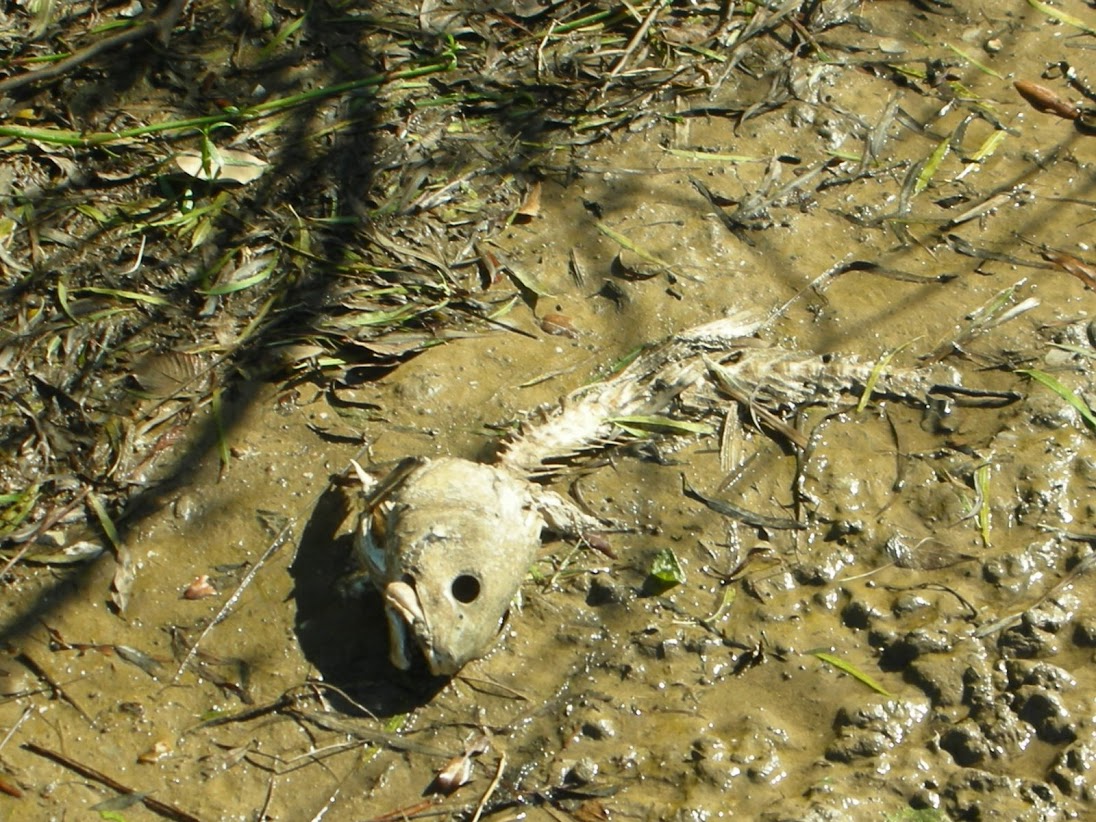
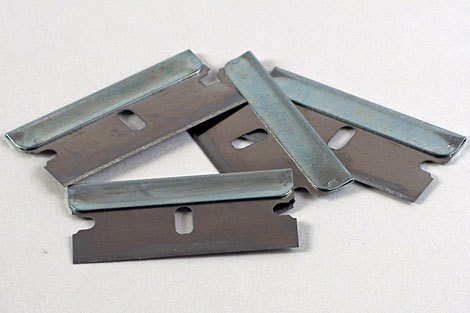
DeadFishrazor-bladesLife has texture, just as linen and pebbles have texture.  But we feel it differently from the way we feel other, less existential, textures.  What feels smooth and comforting to one may feel coarse and confining to someone else.  There’s no way to communicate the experience, though.  If shared, there is no need to explain it.  If it is not, no explanations will ever suffice.  One cannot describe the taste of an orange to someone with no tongue, no nose, no eyes.

The friction of rough sandpaper on soft skin may be good for the sandpaper, but it’s bad for the skin.  So it is with life experiences.  What feels right and proper and intentional to one feels wrong and awkward and accidental to another.  Some people may be satisfied to read a book once; some may need to read it over and over again. If I enjoy carving peach pits and you can’t get enough of I Want to be a Millionaire, we have different textures.

This, of course, applies not just to “life” but to love.  You may think love is part of life and so may say “of course it applies to love if it applies to life.”  But you would be making an assumption that cannot be proved mathematically.  So don’t even try.

You see, your mistake is this: you assume life encompasses love, whereas it’s actually the reverse that’s true.  Love encompasses life.   If I had the time and the inclination, I could prove that mathematically, but both are in short supply so you’ll just have to trust me on this one.

Ah, I’ve deviated from the point I intended to make, the way an absent-minded professor deviates from a lesson plan.  Which reminds me,  the absent-minded professors of legend may have, in fact, suffered from dementia or what we now call Alzheimer’s disease.  Can you imagine the cruelty of the students, snickering at the poor old academics who lost their place in the lesson and forgot they were in the classroom?  Those cruel little criminals deserved to be beaten senseless with clubs and left bloody and dehydrated on a deserted beach. That may be a bit harsh, so let me rescind that last statement.

But that very thought leads me back to what I was saying in the first place. Life has texture.  And it’s different for everyone.   Even those criminal students, whose empathy was left to atrophy while their parents bought them BMWs and taught them God only loves monied right wing religious zealots, have a texture to their lives.  Their life texture correlates with rotted fish and razor blades, but it’s texture, nonetheless.  It’s the ugly side of compassion-free privileged life, the coarse texture that tries to hide beneath a smooth mask.

Opposite that rotted-fish-and-razor-blade texture is the texture of empathy and compassion and unconditional love, the sort of texture that proves, mathematically, love encompasses life.  “Wait,” you may say, “what about those students, those rotted-fish-and-razor-blade people who have no compassion, no empathy, no heart…where is the love in them?”  Ah, you’ve made my case for me.  There is no love in them.  And there is no life left in them.  All that remains is the repulsive texture.

“But wait,” you say, “this all started with your assertion that life has texture.  Now you are saying these rotted-fish-and-razor-blade people have texture, but no life.  You’re arguing against yourself.”

No, I am not.  I said life has texture.  I did not say texture has life.  The rotted-fish-and-razor-blade people have no love, therefore they have no life.   How they continue to hold office and drive BMWs, though, is beyond me.


Posted in Love | Leave a comment

The Sounds of Water

Much is said about the relaxing sound of running water. Listening to the gentle sound of a bubbling brook tends to relax people who pay attention to the sound. Fountains and water features are big sellers due, in part, to the belief that they help people escape the stresses of their day; in fact, these features often are called “calming ponds.” The sound of rain on the roof can be just as relaxing; it can remove the massive weight of stress in a few moments.

Meditation CDs and videos often feature the sounds of water. And white-noise machines, the electronic gadgets that some people use to block out background noise, often include water-sound settings.  I’ve read that some hearing-aid manufacturers incorporate water-sound-background “white noise” to block the ringing of tinnitus.

The sound of water must be magical.

But it’s only the gentle sounds that are magical, don’t you think?  I mean, the crashing noise of water flowing over Niagara Falls certainly cannot be soothing.  The thunderous roar of a river overflowing its banks at a rapids can’t be said to be calming.

Yet, the noisy crash of waves on a smooth, sandy beach is calming.  I know this, because I have spent many days sitting on beaches, allowing myself to be transfixed and calmed by the sound.  Maybe it’s the slow, consistent repetition of the sounds of the waves breaking, the sound of water flowing across the sand toward the shore, then that slightly different sound as the water travels in the opposite direction, flowing back to its rightful place in the world. Whatever it is, my mood changes.  I become more relaxed, calmer, and more mellow; I become more of the person I think I truly am than the person I seem to want the world to see.

The fact that we manufacture those sounds by building fountains or creating white noise machines or WAV files makes me question whether the natural environment is calming or whether it’s just the sounds made by the natural environment that bring about that sense of peacefulness?  As always, I have an answer, though it may not be the right one.   It’s the amalgamation of every element of the natural environment that calms us; the sounds, the smells, the mist in the air, the way the air tastes in our mouth when we breathe it in.  They combine to create a magical stress reducer.  Our white noise machines and calming ponds evoke all of those sensations through our sense of hearing.

Even if there’s no babbling brook or breaking wave or bubbling stream within earshot, and even if there’s no white noise machine at hand, we can choose to remember the sounds that evoke all those calming sensations.  That, from my admittedly uneducated perspective, is what helps meditation relieve us of stress; we remember calming sounds and those calming sounds evoke other pleasantries and, collectively, they filter out the stresses that put us on edge.

If you play the audio-video clip below, and pay attention to it, I think you’ll find yourself relaxing and feeling more at peace with the world around you, if only for a moment.  It’s the sound of water.

Posted in Peace, Water | 2 Comments

Unexpected Attachments

A person can get tied to a place during the course of lifetime.  For some, the attachment can happen gradually, like the slow-growing roots of an oak tree gripping the soil and rocks beneath so tightly nothing can uproot it.

But for others, it can take place almost overnight; the place can be “just a place” until something triggers a connection so deep and so abiding that it’s impossible to tell that it’s new, that it didn’t grow over a lifetime.  In some cases, I suppose, the attachment is a hybrid; a slow-growing tree aided by the injection of a powerful root stimulator.

Of course the attachment is not physical.  It is mental. It is emotional.  It is tied up in the psyche so deeply, though, that it feels like a physical bond.

I’ve seen these kinds of attachments in other people. I’ve experienced them, too.  I was surprised by them.  And one of them, the one with slow-growing roots, grew so slowly I didn’t even know it was taking place.

When I moved to Chicago in the mid-eighties, I had no particular attachment to Texas except for my family.  After I moved away, I stayed in touch with them, but with few others.  I didn’t read Texas news, did not keep up with Texas politics, and didn’t miss the heat and humidity and deeply conservative nature of the majority of people in the state.  Perhaps the fact that I didn’t miss “things Texan” helps account for the fact that I fell in love with Chicago and the upper midwest.

My attitude about Chicago changed from vague concern for my safety and that of my wife to adoration.  It was a big, cosmopolitan city with unparalleled opportunities to see and experience new cultures and new cuisines.  There was a vibrant, exciting population that was visible! People walked!  The streets of the city filled with people. There was art, music, festivals, fairs, a beautiful lakefront, spectacular architecture, food from a hundred cultures, and people of every color and hue who spoke languages I’d rarely heard in Houston, from which I’d moved to Chicago.

But there was crime and congestion.  The traffic between downtown Chicago and O’Hare airport was the stuff of legends; it was horrible.  The “projects” were dangerous places for anyone, probably doubly so for unsophisticated folks from Texas.   Those downsides notwithstanding, I loved being in Chicago.  What I didn’t love was the job that got me there.  And I didn’t love the job that I had after that.  And the one after that.  I felt a need for more money, more challenge, more responsibility.  Without even realizing I was about to sacrifice one of the things that made me happiest, I took a job that required me to leave Chicago.  I made a temporary move for the job to White Plains, New York, before moving, along with the job, permanently to the Dallas/Fort Worth area several months later.

After the move to Dallas, and after the chaos and long hours of work involved in the job began to subside, I began to realize how much I missed Chicago.  Not only did I miss my wife, who remained there for a year while I was in the process of relocating my employer, but I missed the culture and the environment and the weather.  It was a shock; I hadn’t realized how fully and completely attached I had become to Chicago.  It wasn’t just Chicago.  It was Chicago’s proximity to the beautiful countryside in Wisconsin and Indiana and Michigan.  It was being able to visit apple orchards and fruit stands and buy farm-grown vegetables by the side of the road just a short drive out of the big city.  Though Chicago’s traffic was nothing short of horrific, it had what Dallas did not: a first-class system of public transportation.  So many, many things to miss.  And I did.

But I’d made the move and had to adjust and adapt.  My wife moved down to  join me and we bought a new house in a new subdivision with trees and a feel of being “in the country,” though we were just a short distance away from the thick of the traffic and the chaos of a car-dependent region.  And then, several years later, we moved to another house, the one in which we now live, after I got another job forty miles away.  That job lasted only a little over a year before we started our business, a business that ate up most of our days and evenings for more than thirteen years.

During all that time, though, we adapted to Dallas and to Texas.  We went for long, aimless drives far, far from the madness of Dallas traffic.  We went in search of wildflowers in the spring and we found them; huge fields of bluebonnets, Indian paintbrush, Mexican hats, evening primrose, giant purple thistles, wine cups, and others too numerous to remember, much less name.  We visited the beaches along the Texas coast, viewing all manner of  birds from roseate spoonbills to laughing gulls to least terns to frigatebirds to cormorants.  We slowly explored the far reaches of Dallas and Fort Worth and east Texas and wandered into Oklahoma and Arkansas and Louisiana.  We went to rodeos and concerts and settled in to a lifestyle that allowed us to get away for brief changes of scenery.  We toured old forts in Goliad and drove through Galveston in the aftermath of  Hurricane Ike.  I remember driving through many old, decrepit little towns and commenting to my wife, “I would love to be able to come here and work to rebuild this place; it could be a beautiful and lively little town with some time and attention.”

I remember back to the years we drove through the desolate and arid but beautiful  stretches of west Texas, where desert morphed into mountains and the skies are so big and beautiful and full of light and color they bring a lump to your throat.

And it’s beginning to hit me.  Just as we’re about to sell our house and move away from Texas, I realize I have an incredible attachment to this place.   The weather, especially the heat of the summer, can be horrible.  Summers in north Texas are brutal and no one should have to endure temperatures of 100, 105, 110 degrees.  The worsening, deeply-conservative-bordering-on-fascist politics of the State are off-putting and, I truly believe, dangerous to freedoms that we enjoy.  The lack of political will to create a decent, if not spectacular, system of public transportation is disheartening.  The car culture shows no signs of abating.  Lack of respect for women, at best, or misogyny, at worst, is rampant, especially in the idiot-cowboy culture.  The heat of the summer can do horrific things to concrete slab foundations.  There’s the risk of tornadoes year-round and the coast is subject to hurricanes from June to November.

But for all those things, I have an attachment to Texas.  After giving this matter a lot of thought, I’ve decided this attachment is the kind that grows slowly over a long period of time.  It’s the kind with roots that slither between the rocks buried deep underground and latch on to them so tightly they cannot come unwound.  My attachment to Chicago is the other kind; the kind that springs into being in the blink of an eye.

So what do I do, now that I’ve come to this realization that I have this life-long attachment that just keeps getting stronger?  How do I break the bonds that tie my soul to this place?  I don’t.  I acknowledge them and move on.  I know I have the capacity to develop strong attachments to other places, so I will develop new attachments.  I will remember and treasure those bonds that have grown over my lifetime so far, but I will not let them interfere with my desire for a better climate, a more hospitable political atmosphere, access to a different and more appealing type of sophistication.

And, lest I don’t forget, this is not all about me.  My wife, too, no doubt has “place” attachments.  She grew up in the San Francisco Bay area; she shared my years, and then some, in Chicago and grew to love the city…but not the cold, snow, and ice.  She has spent decades in Texas, too, and has had most of the same experiences I have had over the last 40 years or so.  So she probably has some of the same feelings I have about attachments (though she is a far more private and introverted person than I).  But she, too, wants to escape the climate, especially.  Even if I weren’t able to comfortably break the shackles to Texas, I would do it because it’s what she wants, too.

All of this leads, inexorably, to the fundamental truth about attachments to place: they are, more than anything, attachments to people.  It’s the people who share the place who matter, not the place itself.  Even the people in Texas…including those who I do not like, admire, or otherwise value…contribute to my sense of Texas as a place.  They help get water to the roots.  But the most important person to me, regardless of place, is my wife.  As long as I’m in a place with her, that’s the best place to be.  That attachment will be vital to my ability to acknowledge my attachment to Texas and move on.

It’s odd, this rather unexpected realization that I have such a remarkably deep attachment to Texas, a place I’ve often criticized and have so frequently wished to leave.  The word “conflicted” is so apropos to the way I feel right now.  But, on the other hand, I am excited to be readying for a completely new adventure, an opportunity to strengthen that already rock-solid bond with my favorite “attachment.”

Posted in Love, Memories, Philosophy, Sense of place, Where to Live | 2 Comments

Heat and Highways and Butchery

The heat returneth.  It’s 79 degrees this morning, just before 6:30 a.m.  I walked outside awhile ago, hoping to bask in the coolness of the budding dawn, but it was not to be.  Instead, I opened the door to a wave of warm, humid air…air that challenged me to wade into the thick of it.  I met the challenge, albeit briefly, then returned to the refrigerated air that makes my home livable most of the year.

It’s not as bad as it could be and has been in years past.  Of course, summer’s just begun, so the weather could turn on us with a vengeance, but thus far, we’ve been unusually fortunate.  Until just a few days ago, the late evenings and mornings have been wonderful.  Temperatures in the sixties, nice breezes, lawns that look like they belong in Portland, Oregon, not in Dallas.

It’s when the weather teases me and plays with my mind that I think I could learn to love it here in Dallas.  Reality sets in, though, on mornings like this.  There’s really nothing keeping me here.  And the weather is prodding me to leave.  So our plan to tidy up the house, put it on the market, and hit the road when it sells remains intact.

This move will be different.  In the past, whenever we’ve moved to a new city, we’ve been busy with work and have not made the time to meet people and develop friendships.  Now, though, we have nothing demanding our time, nothing preventing us from seeking out people with whom we might develop friendships.  I intend to make it a point to meet people when we land someplace.  Not just meet them, but socialize with them.  My wife and I tend to be shrinking violets in social settings; hard to believe, perhaps, but it’s true. We tend to avoid getting too “close” to people.  I guess it’s because we don’t want to find ourselves wrapped up with people we don’t want to spend much time with…which would require us to withdraw from them and thereby seem unfriendly.  So we don’t behave in too friendly a manner from the start. Odd, that is.   That will change.  It has to.  There is no “work” to serve as a conduit for development of social relationships; we have to grease the skids ourselves, as it were.

What the hell am I rambling about?  I honestly don’t know; this must be one of those stream of consciousness posts I sometimes talk about, but don’t pin down.

Recently, both my wife and I have stumbled across interesting articles about world travel.  In my case, I came upon an article about a couple in their late sixties or early seventies who sold their two houses and all their contents and began traveling around the world, stopping for a few months at a time to live in and experience a country of interest.  In my wife’s case, she came across an old clipping she had saved about a program of around-the-world travel on American airlines; apparently, it’s possible to buy discounted fare that allows travelers to travel in one direction around the world during a one-year period, stopping wherever they like for as long as they like, provided all the travel is in one direction and is completed in a single year.  Maybe the happenstance of finding two such “world travel” items at the same time and finding them quite interesting is a sign.  Maybe the Pacific Northwest should not be our initial destination; maybe the rest of the world is a better one.

Yesterday’s brisket was good.  It’s another one of those bits of happenstance; an unplanned family visit prompted me to decide to smoke a brisket to celebrate the visit and the fifth of July.  Though good, the brisket was not as moist as the first one I did; I blame the fact that I bought Select grade beef instead of Choice grade.  I have learned a little bit about meat grading in the last couple of months; enough to make me want to learn more.  And just as I was thinking I want to learn more, I discovered that there is a short course, just a few days in duration, held at Texas A&M University in College Station that introduces the novice to beef…from slaughter to butchering to grading.  On the one hand, it sounds violent and off-putting, but on the other, it’s fascinating.  I may explore more; I’ve just stated all I know…I don’t know if it’s offered frequently, what it takes to attend, how much it costs…nothing.  I really should look into it.  I like to learn about things that are utterly outside my realm of experience.  When I took a welding class, I was intrigued by it; it was unlike anything else I’d ever done.  I loved it!  But, alas, I have no shop, no tools, no place to weld.  So I’ve forgotten most of what I learned.  But I am sure I could pick it up quickly if I got back into it.  And I could create art…not good art, but art. Yes, I’d like to do that again.

There’s so much out there that can be interesting, if only we’d allow ourselves to overlook or ignore our proclivities toward reacting badly to things of which we know little.  I suspect there are aspects of even the worst “jobs” that could be compelling if we’d just allow ourselves to open up to the possibilities.  Paving highways, for example, seems like brutally hot, smelly, uncomfortable, and unappreciated work.  But I bet there are aspects of paving highways that make those who do the work proud of what they do and keeps them interested in doing it.  Maybe not.  But I bet there are.

Now that I’ve written utter drivel for almost half an hour, I’ll stop and do something equally unproductive for awhile.

Posted in Food, Travel, Where to Live | Leave a comment

National Pride

Today, the Fourth of July, I contemplate this country in which we live.  I have not been, nor am I now, a blind patriot.  I will never believe “my country, right or wrong.”  Blind patriotism is as dangerous as treason and perhaps more so.  That having been said, I cannot help but feel pride in this country of ours.  We have done so much right; so much good has emerged from and through this country.

Our founders created the model for modern-day democracy, a model that remains a beacon today for oppressed people around the world.   We have confronted and overcome fascists and madmen who, had they been allowed to succeed in their efforts at world domination, would have crippled humankind in unfathomable ways.  We have managed to create an infrastructure which delivers clean, safe drinking water to almost every person in the United States.  We have the wherewithal to travel from coast to coast and border to border, comfortably and safely if we are careful and attentive. Our education system has helped make us a literate people.  Most of us have at least our basic necessities met and many of us have the opportunity to rise above our financial stations.  We have public parks, libraries, and museums.

Our military is among the best trained, best equipped, and most stable in the world.  Our police forces in most communities truly serve and protect.  This country has spawned a huge number of remarkably talents artists, writers, and actors who help spread the story of this great land far and wide.

Most of us can feel safe in our homes and in our neighborhoods.  We can feel safe in our country.

There is so very, very much to be proud of and to celebrate about the United States of America.  And I do.  I really do.

But the wonder and beauty and good that describes us as a nation must never allow us to be blind to the things we have yet to do or the things we must fix to enable us to continue to be a shining example to the rest of the world.  If we allow the ugly blemishes on our national conscience to go untreated and if we permit our pride in what we have done for humanity overtake what we have done and are doing to humanity, all of the good that has come before will be for naught.  The people of a strong nation do not need to, and should not, blindly claim that the nation’s every action is right.  Instead, they should celebrate the good and dedicate themselves to eliminating the bad.

Our rightful and legitimate pride in all we have done as a nation must not blind us to the tragic mistakes we have made and are making.  For example, we should not abuse our well-trained and well-equipped and loyal military by deploying them in immoral wars; we should not use the men and women of our military as pawns in political games.  We should not allow our pride in our law enforcement agencies to enable us to overlook abuses of power.  We should not allow our self-described morality to balloon into a belief that there is only one way to see the world.

For all the good this country has done and is doing, there is an enormous dark side that merits our attention and our resources to overturn.  We cannot allow a powerful democracy to morph into the kind of fascist state our sons and daughters have fought and died to defend against.

Freedom.  That’s the concept upon which this country was founded and upon which this country was built.  We owe it to ourselves and the world to demand of ourselves the utmost in loyalty to that foundation.  Celebrate the good, acknowledge and overcome the bad.

Posted in Independence Day, Philosophy | Leave a comment

Kaboom Town

kaboom-town-fireworks-addisonLast night, we went to Kaboom Town with friends.  Kaboom Town is the Town of Addison’s annual July 3 fireworks bash, held in Addison Circle Park.  It is widely regarded as one of the most spectacular fireworks displays in the country, a well-deserved accolade, in my view.  It’s more than just  a fireworks show, though.  It features vintage airplane aerobatics, war plane flyovers (Cavanaugh Historic Warbird Flyover), live entertainment, food and beer and wine vendors, and a lot more. It has grown well beyond Addison Circle to encompass the entire town and well beyond.  Parking and traffic headaches are testament to its wild popularity.

Anyway, we went.  We picked up our friends and their niece at around 5:00 p.m. and headed over to Addison Circle.  Due to a lot of street closings, traffic re-routing, etc., we took a long, circuitous route but finally managed to turn (the wrong way) into a driveway that we thought would lead to a parking garage.  Well, it led to the exit for the parking garage.  Fortunately, just beyond the parking garage we saw that a LOT of people had already begun parking in a field next to it.  We jumped the curb and joined in.

Our friends had made a reservation at Kahlo’s, a Mexican restaurant in Addison Circle, so we walked the few short blocks to the restaurant and enjoyed a decent alfresco meal.  We could have eaten indoors, but the extremely rare tolerable temperatures convinced us to do otherwise, and it was a good choice.  We were able to have a leisurely, unrushed meal before heading over to the grass-covered “watching” area. My friend and I went back to the car while we awaited the meal check and unloaded the cooler full of water and the camp chairs we had in the trunk.  By the time we got back to the restaurant, the check still hadn’t come, so we continued to wait…eventually, we paid up and headed over to find a place to lay out our blanket and chairs.  Another couple, friends of our friends, and their child were to join us later, but they bowed out at some point, texting or emailing their regrets.

Before dusk, we watched wave after wave after wave of aerobatics, war bird flyovers, a skydiver or two, and various and sundry other aerial entertainment.  Though the park was quite crowded, it wasn’t nearly as jammed as I had expected.  We learned later than the threatened limit on admissions to the park had, indeed, been enforced at some point after we arrived.  When, finally, the fireworks started around 9:30 a.m., we quickly decided the wait was worth it. I wish I’d taken still shots and more video, but I didn’t; the video below is all I can show and it doesn’t begin to do justice to the event. It truly was a spectacular show.

Once the fireworks ended, we waited for a good 30 to 45 minutes before ambling back to the car. The traffic was nothing short of horrible, but we got lucky and headed in the right direction to avoid the worst of it. Though the ride back to our friends’ house and then home was long and circuitous because of the street closings and traffic rerouting, it was an easy drive. A nice end to a nice evening.

Posted in Independence Day | 1 Comment

Discipline: Doing Without

I subscribe to, but infrequently read, the periodic musings of a guy named Leo Babauta who writes Zen Habits. For some reason, the emailed post I received on July 1 caught my attention.  Entitled, “A Year of Living Without,” it detailed Leo’s plans to live without, for a month at a time during the coming year, something he normally enjoys.  One month, he’ll give up coffee, another month he’ll give up alcohol, and another he’ll give up video entertainment.  His purpose in “living without” is to test the boundaries of his needs.

“Testing the boundaries of my needs.”  That struck a chord within me.  What do we…what do I…need to be content?  Do I need television or Netflix? Do I need alcohol?   Do I need my morning coffee?  Do I need my iPhone?  Do I need the internet?  Must I go out to restaurants to enjoy a meal?  Do I need meat in my diet?

Chinese symbol for self-discipline

The answer to each of those questions is a simple one: no.  I do not need those things, I simply want and enjoy those things.  The real question is this: do I have the discipline to do without them?  And a corollary question: what value is there in doing without things I want and that I enjoy? I intend to find the answers to those questions by testing the boundaries of my discipline. My hope is that I will find more than the answer to that question.  I hope that I will find focus that I’ve been lacking.  And, at the same time I am testing the boundaries of my discipline by doing without, I will test the boundaries of my discipline by replacing the absent “thing” with something that’s missing today.

For example, if I choose to do without coffee, I may not replace it with tea, as Leo plans to do, but with a two mile walk.  If I choose to do without television and video entertainment, I may replace it with time devoted to writing. If I choose to do without eating meat, I may replace it with meditation.

I haven’t completed my plan, but when I do, I will write about it.  And I will share what I hope to be my successes in exercising self-discipline and what it teaches me about myself.

Posted in Doing Without, Happiness, Philosophy, Self-discipline | 1 Comment

“Resting” Face

I think I may have discovered why some people automatically assume I’m pissed off, unfriendly, or downright dangerous.

Posted in Communication, Humor | 2 Comments

Central Texas Road Trip

For my wife’s birthday, we had planned to drive to Abilene and stay the night in a Best Western motel, using our free room voucher that was to expire June 30.  We’d have dinner at Perini Ranch, a steakhouse in Buffalo Gap.  Then, next day, we’d go home.  But online reviews of Perini Ranch convinced us that it may have gone downhill since we were there last, two or three years ago.  So, instead, we drove to Central Texas a few days before her birthday.

We got up early, with the intent that we’d leave the house at 6:00 a.m., heading toward Fredericksburg.  Thanks to my dilly-dallying, we didn’t leave until almost 6:30.  That, I am sure, made a big difference in the Dallas traffic we experienced on the way out of town.  By the time we made it to I-35 East (heading south), the roads were clogged with traffic, though cars were still moving at a fast clip…there was just very little space between them.  Traffic slowed to a stop once or twice, but for the most part it was just heavy; impatient drivers who think themselves invincible were darting in and out of lanes, trying to move ahead of the traffic that was moving slower than they’d like.  They simply wasted gas and frayed nerves; their progress was measured car-lengths ahead of those they passed, not in miles.

Not long after we turned onto U.S. 67 heading west, the traffic had dwindled considerably.  Then, when we passed I-35 West (heading west), it unwound even more.  My wife suggested we stop for breakfast; it wasn’t until we reached Hico, a good hour later, that we actually stopped.  We pulled into the Koffee Kup, a tiny place at the intersection of Texas 220 and U.S. 281.  We’ve been there before, but it has been years. The meal wasn’t bad, but it wasn’t memorable; I think I had breakfast tacos, but I’m not sure.

After breakfast, we continued south on U.S. 281 to Evant, then headed west on U.S. 84 to Texas Highway 16, then south to Fredericksburg. Once in Fredericksburg, we parked near the visitor center, picked us some maps and brochures and began wandering around the downtown area.  We went from shop to shop, viewing the arts and crafts and clothing and jewelry and nick-nacks and just enjoying ourselves.  When it was time for lunch, we stopped at the Silver Creek Restaurant and Biergarten. I had a Lobo Negro beer (a local brew) and a pepperwurst sandwich, while my favorite wife drank water and had a cashew chicken salad.

From there, we continued wandering, stopping in to marvel at the size and scope of Der Kuchen Laden, a kitchen shop of extraordinary proportion.  I could have stayed there for days and bought thousands upon thousands of dollars worth of kitchen gadgets, but my wife was with me, which blocked that.  Instead, we each bought a small cardboard bowl of store-made ice cream; peach for me and vanilla for my wife.  Good, but not great.

As we wandered about the downtown area, a place jam-packed with stores, my wife spied something else she had to try: chocolate covered bacon from the Lone Star Candy Bar. Neither the chocolate dipped slice of bacon nor the chocolate dipped lemon peel were of sufficient taste and quality to warrant my unqualified recommendation.

Later, we stopped in at Cultures Grill & Bar, where I enjoyed a couple more beers, a Franconia Dunkel (a dark lager) and a Goose Island IPA, both of which were very good.

Then, off we went to our freebie hotel, the Best Western Sunday House.  We got checked in easily and quickly, then relaxed for awhile until dinner time.  For dinner, my wife opted for an upscale restaurant: the Navajo Grill. Now THAT is a nice restaurant!  Despite being an upscale place, I did not feel out of place in my t-shirt, shorts, and flip-flops (especially after some like-dressed people came in a bit later).  For drinks, I had yet another beer (Fireman’s #4) and my wife had a Strawberry Cilantro Margarita.  The dinner was excellent!  For starters, my wife ordered a roasted beet salad (herb-roasted beets, pickled red onion, & goat cheese on bibb lettuce, with smoked paprika dressing) and I ordered marinated goat cheese (local goat’s cheese with sun-dried tomato-red chile-herb marinade, warm home-made pepita flatbread). Outstanding! Then, for our entres, my wife ordered hot & crunchy shrimp (almond-red chile crusted Gulf shrimp with ancho chili mashed potatoes & seasonal vegetables), while I ordered the bone-in pork chop (double-cut Niman ranch pork chop grilled to perfection, seasonal chutney, garlic kale & ancho mash). We were not disappointed. There was NO WAY we could eat dessert; the meals were huge.  Photos of these beasts follow.

CrunchyShrimp

PorkChops

BeetSalad

GoatCheesePepitas

Magarita


After dinner, we headed back to the motel to sleep off the massive calorie overload.

The next morning, we awoke reasonably early and decided to check out a kolache shop not far from the hotel. The jalapeño-cheese-sausage kolache was superb; they use sausages from a local producer, Opa’s, for their kolaches. The sausage kolache, though good, wasn’t as filling as I would have liked. So, we decided we had to go in search of more food. We found it at the Old German Bakery & Restaurant.  We had a delightful second breakfast; I ordered a single German pancake and a side of sausage.  It was worth a trip back!

Then, we went back to the motel to check out and headed out for more sightseeing in the area.   But first, we stopped at the retail shop for Opa’s Smoked Meats, where I bought a pack of  jalapeño sausage (no cheese for me) and a dried smoked sausage for later nibbling. Once our “stuff” was back in the car, we headed south toward Kerrville.  We drove aimlessly around for a while, enjoying the sites of Kerrville, country lanes, and the like, until we decided to take a special drive along the Guadalupe River.   It was breathtaking scenery, with lots of rock outcroppings, wide rock ledges that served as sunning and diving platforms along the river, and lots of greenery.  Delightful stuff.

Once we made that drive (Texas 39, then Texas 27), we headed further south to Leakey, where we stopped for lunch at the Mill Creek Cafe.  I posted a photo, to Facebook,  of my empty plate after having lunch, commenting something to the effect that this was my upscale lunch plate after I’d eaten lunch.  That comment was made with tongue firmly implanted in cheek.  The Tex-Mex buffet was mediocre, at best.  Edible, but not something I’d recommend as a “must eat.”  Following lunch, we continued to amble about, visiting Bandera and environs.

We decided to head back toward Fredericksburg so we could visit Wildseed Farms, a wonderful place that has some of the most beautiful grounds I’ve ever seen, all planted in native Texas plants and wildflowers.  None of the photos I took do the place justice; suffice it to say that I want to go back…I want to buy seeds and plants and create a lush Texas wildflower environment.  Almost enough to make me want to stay in Texas.

PeachtreeSuitesBack in town, we opted to find another place to stay, instead of the Best Western (lots of reasons, about which I may write later…much later).  We found an intriguing place called the Peachtree Inn and Suites,  which was a real find.  It had available rooms from $49 per night up; we opted to splurge and got a suite with a full kitchen, living room, and bedroom (plus a nice bath) with a porch for only $99.  We sat outside, facing east, for awhile, enjoying the solitude of the place.  It was a nice place; old, not flashy, but very comfortable and relaxing.  The photo to the left was taken outside our room, looking north; to the east is a large area of greenery that borders, I think, on a creek.  It was truly a beautiful place that is worth visiting again next time we find ourselves in or around the Fredericksburg area.

HugeBurgerFor dinner, we took the backroads to a place called Alamo Springs Cafe, a place tagged as the number 3 best burger in Texas by Texas Monthly magazine.  The place is in the boonies, a good 30 minutes in the country from our motel.  It’s adjacent to the Old Tunnel State Park, which is home to a large colony of Mexican freetail bats. We enjoyed a huge burger and some excellent Texas beer.  I was a little disappointed with the burger; it wasn’t bad, but I expected the taste to be exquisite.  However, it was pretty plain, aside from its monstrous size.  But the place itself was worth a visit; I’d go back!

The next morning, we walked about a block to Andy’s Steak & Seafood Grille for breakfast.  We opted for the extensive buffet, which had about anything we might have wanted except eggs cooked to order and steak; we had scrambled eggs and were happy with them.

From there, we set out looking for a place to buy Texas peaches and tomatoes, as we’d seen huge numbers of signs advertising those two products.  Several miles east of Fredericksburg, we found a place and stopped.  We learned immediately that the peaches were not from the Fredericksburg area; the peach wilt had destroyed 95% of the year’s crop, so the farmers and roadside vendors were selling products trucked in from the Pittsburg area of East Texas.  But the tomatoes were local.  We bought both, despite being disappointed that local peaches were unavailable.

With a car full of peaches and tomatoes (well, full is the wrong word), we continued east until we reached a Farm-to-Market road that promised to take us to Willow City.  We wandered around and about the back roads to Willow City, only to see that there’s a Willow City Loop; we took it.

Along the “loop,” which went through some beautiful country, we saw jackrabbits, roadrunners, deer, lizards, and all manner of other beasts that thrive far, far away from humans.

We took a slightly different route back home, opting to drive through Lampassas, where we stopped for lunch at Alfredo’s Mexican Restaurant.  The meal was acceptable, but uninspired.  The location, though, was rather nice, as it was next to a river; after lunch, we went wandering about, checking out the sights of the river before heading north toward our next stop (aside from gas) in Hico.

In Hico, we stopped at Wiseman House Chocolates. where my wife bought a few chocolate treats.  We’ve since tasted them; I cannot complain about the stop.

After leaving Hico, we ambled home to Dallas, where it was good to order a pizza from our favorite place, chill, and get to bed early.

This trip was intended as a birthday celebration for my wife, whose birthday was the day we returned to Dallas.  I hope she enjoyed it; she deserves it!


Posted in Food, Travel | Leave a comment

Stream of Consciousness Stuff…

This morning I awoke at 6:05 a.m., a much more civil hour than yesterday.  Two cups of coffee later, I’ve read a number of posts on Facebook, viewed a bit of email (most of which was junk), and wandered into the back yard to check the status of the wood in the smoker.

To my surprise, hot embers remain in the smoker, so I won’t be cleaning out the firebox and disposing of the ashes just yet.  Maybe later today, maybe tomorrow.

Backyard6222013 As I went outdoors, I thought to myself how nice the yard looks this morning; lush and green and inviting.  One of the crepe myrtle trees is beginning to blossom, its lavender blooms just beginning to fill out the right side of the tree.  In a month or two, the entire thing will be a mass of color, as will its twin on the right side of the yard.  The two red crepe myrtles in the front yard will, similarly, be flush with color.  The three tomato plants given to me by my neighbor are doing well, but soon I’ll need to transplant them from the too-small plastic buckets into some larger and more suitable for large plants.  It may be pointless, as we’re still aiming to get the house on the market soon, but perhaps a new owner will appreciate tomatoes as much as we do.

CNNTriviaBack indoors, I read the latest news from CNN.  It’s sometimes hard to find news on CNN Online; most of its “headline news” would be more appropriate for a supermarket tabloid.  “Why we love the mob” is a bizarre headline for a “news” website, as is “Network drops her,” along with a photo of Paula Deen.

Or maybe I’m the only one who thinks the potential of a leak at the Hanford nuclear site has more real “news” value.  And maybe my assessment is wrong that the horrendous floods going on in Alberta, Canada are more important than our love for the mob or Paula Deen’s departure from The Food Network.   Oh, well, I am not being paid to make those calls.  Maybe no one is being paid; maybe an algorithm has been programmed to sync the news headlines with the intellectual capacity of the lowest common denominator of the masses.

If my wife were up by now, I would entreat her to go to have breakfast at Tejano BBQ & More, a hole in the wall near our house where we’ve never eaten.  I stopped in one afternoon just to look at the menu and was hooked immediately: tacos de barbacoa, tacos de lengua, sausage…the list goes on.  It smelled wonderful.  The staff who greeted me at the counter were not upset that I did not order; they were very nice and friendly and invited me to come back.  I think it’s a family-owned and family-operated place. And I LOVE that they open at 6:00 a.m.!  But, they are closed Sunday.  I want to go today!

My wife’s birthday is coming up in less than a week and we’ve decided to celebrate it by taking a little road trip.  We had planned to drive to Abilene and have dinner at Perini Ranch in the nearby community of Buffalo Gap (we’ve been before and loved the mesquite-grilled ribeye), but recent reviews suggest the prices have risen and the quality has fallen.  So, instead, we’re heading to Fredericksburg, a small town (roughly 10,000 people) in the Texas hill country.  It is a community rich in German heritage and has become quite the tourist destination; lots of bed and breakfast inns, small-town shops line the downtown streets, and plenty of arts and crafts and musical events, etc.  We will stay one night in Fredericksburg, maybe more and may wander down to San Antonio.  My wife has her eyes on visiting one or two places in the area that have been featured on Diners, Drive-Ins, and Dives, the Guy Fieri food program.

Well, it’s now nearing 8:00 a.m. and my wife is still not up.  I suspect she may have been awake again in the middle of the night, so it may be awhile yet.  I imagine I may have to wait from Tejano BBQ & More.  Oh, well, I can cope with that, I suppose.  Onward to other stuff this morning.

Posted in Food, Travel | Leave a comment

Insomnia, Eating, and Friends

It’s four o’clock on a Friday morning and I’m up for the day, it seems.  That’s not a bad thing, just a tad taxing in that it contributes to my occasional sleep deficit.  I think it’s sending my body a message: “get back to the walking routine!”  That’s probably it.  And the message is a good one.  Though getting started on my morning walks was always a chore, once begun I felt much better.  I think I shall do it again, despite the fact that I will be doing it at a time of year in which the temperatures in Dallas hover just over 80 degrees early in the morning…82 degrees this morning at 4:00 a.m., in fact.

I am not alone in my early-morning insomnia.  When I awoke a while ago, my wife was up already, sitting in the family room, reading a book.  She went back to bed shortly after I got up.  Early-morning insomnia has been a habit of mine for quiet awhile now, but she’s only recently been in the habit of getting up for an hour or two in the middle of the night, then going back to bed.  When she does this, she tends to sleep in a bit.

BrisketThis morning, a friend will come to my house in a couple of hours to use my smoker.  He and his wife have visitors coming in this weekend and they’d like to smoke a brisket for their guests, so I happily agreed to let him use my smoker.  It’s an all-day affair, smoking a brisket, so we’ll spend the day tending to the fire/embers and working to ensure that the meat reaches its peak of perfection.  Smoked brisket is, in my opinion, one of the joys of life and deserves the adoration it gets.  The photo to the left does not do justice to the brisket I smoked a week ago.  Beneath the black “bark,” the crunchy but tender exterior created by the smoke and heat, the meat has a distinct reddish smoke ring.  The taste is beyond wonderful.

But today, the brisket is for my friend and his visitors.  For me, I’ll put a few spicy pork sausage links into the smoker.  They will make two meals for my wife and me, assuming I smoke them just right.  The trick is to ensure that the sausage is cooked through and through (with pork, it’s a necessity), yet prevent them from being over-done.  We’ll see just how adept I am at smoking.  I already know I’m not a pro; I’ve only used the smoker twice since I bought it!  But I am learning, quickly, that it cooks more quickly than it “should,” even though the thermometer says it’s cooking at the recommended temperatures.  I gather every smoker has its own personality, as it were, and that learning how to deal with that personality is part of the challenge, and fun, of smoking meat.

As my wife and I go about making our plans to sell our house and move away from the oppressive heat and right-wing politics of Texas, I’m wondering whether my smoker will be joining us, whereever we go.  I’d like to take it, but it’s a monstrously heavy beast and its probably not well-suited to travel, especially nomadic travel, in which we might engage. My friend, the one who’s coming over to smoke the brisket today, has said he wants to buy the smoker if I decide not to take it with me; that’s good, as I know if will have a good home!

Sometime within the next couple of weeks we’ll have another friend over for dinner so we can catch up.  I’d like to see him more often, but we both get caught up in our own priorities and time zips by.  I hadn’t even told him of our plans to move until he sent me a message to suggest we get together for lunch or dinner.  And I didn’t know of his plans to go to Greece and Italy in September to visit family.  Even living close by, people can lose touch.  I wonder whether distance exacerbates that unfortunate tendency.  I shouldn’t wonder; I know it does.

My coffee cup is empty and my mind is vacant, so I shall leave my keyboard and go explore what this morning has to offer.

Posted in Food, Friendship, Insomnia | Leave a comment

Cloudy Clarity

The moments of absolute clarity, those instances in which the veil of confusion lifts and the realities of the world reveal themselves, are precious.  Precious is synonymous with rare, isn’t it?  Well, yes it is.  And those moments of pristine clarity are rare, indeed.  So rare, in fact, that I’ve only heard whispers of them; I’ve never actually experienced them.  Maybe “them” is the wrong pronoun.  Perhaps “it” would be better usage.  Are we talking about “that” moment of absolute clarity, rather than “those” moments?  (And who is this “we” in this context, you have to wonder.)

Am I using the correct pronoun? Such a deep question!  But aren’t they all just as “deep?”  Aren’t all our questions really just  as shallow and self-centered?  “Am I using the correct pronoun?”  As if anyone cared!

Well, “they” should care!  You see, clarity is elusive and knowledge is a fragile thing.  Noise and confusion can quickly muddy those brief moments of understanding, hiding and then shattering what once was “truth.”  Just how many moments of clarity can any of us hope to achieve in our all-too-brief lifetimes?

I think all these questions must have arisen from being up too early with too little coffee yet.  Something about the darkness of pre-dawn makes me seriously silly with questions that aren’t so silly, after all.

Posted in Philosophy, Wisdom | Leave a comment

Shifting Sands

Oh, about my last post.  Never mind.  House isn’t on the market yet.  Won’t be until we are ready for it to be.  That may be a month or two.  Or three.

In the interim, please send money.  Lots of money.  VAST sums of money.  It will take the edge off, you know?


Posted in Housiing, Moving, Where to Live | Leave a comment