What the World Should Look Like

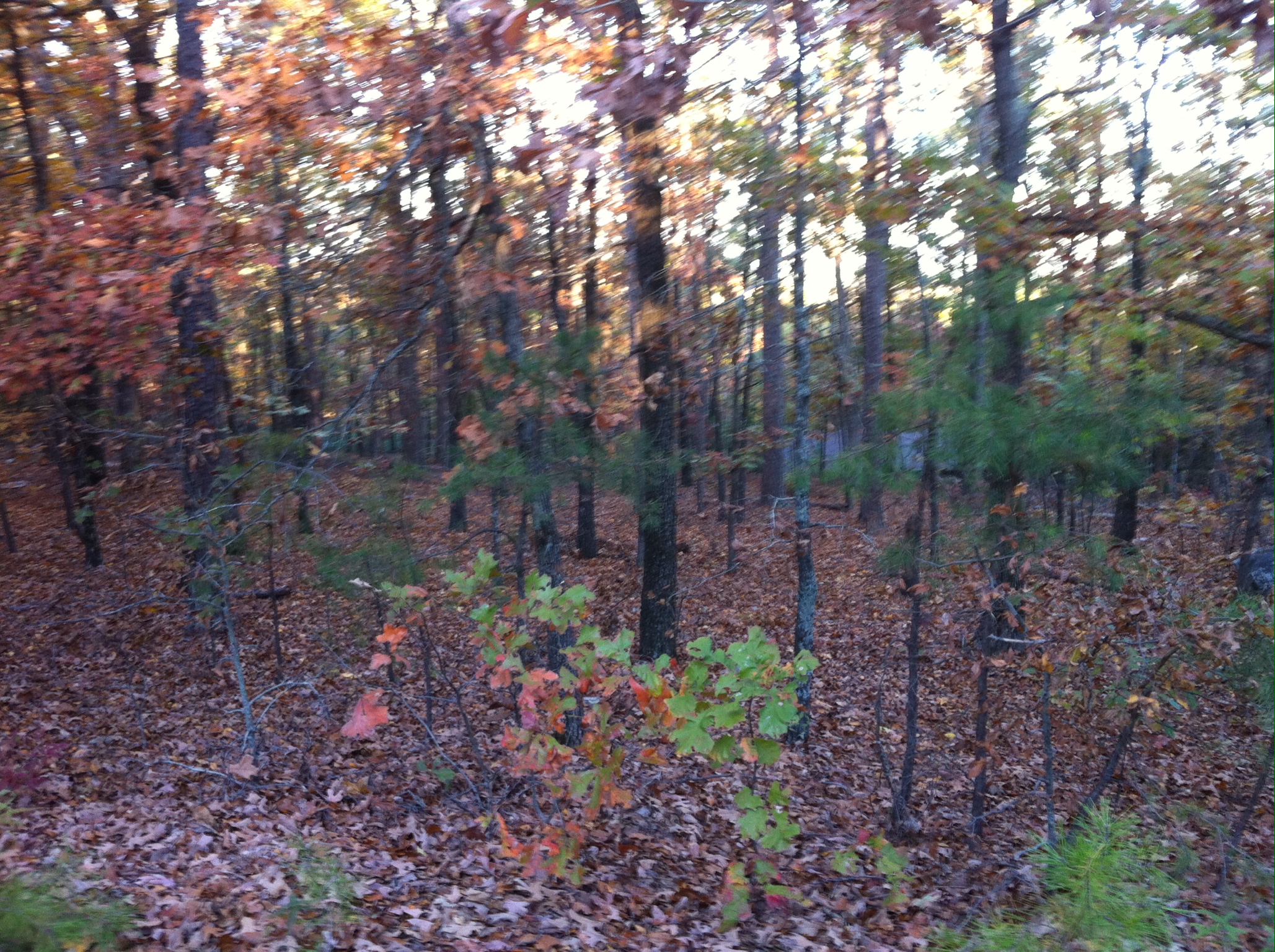
LookingoutbackThis is the view from our friends’ back deck.  This is what the world should look like.  Not a crush of cars, neon lights, and shiny steel.

Posted in Nature | 4 Comments

Poems I Want to Read

speakingpoemsDuring a recent visit with a couple who hosted us on a trip to explore where we might want to live, I learned of a book of poetry I want to read.  I want to know; have you read it?  It is entitled Speaking Poems; it was written by Ric Masten and published in 1977.

We were sitting at the table after dinner one evening, having drinks and chatting about this and that, when one of my friends complimented me on my poetry on this blog.  She is more aware than to truly like my bad poetry, I think, but I appreciated her generous comments, nonetheless.

She then went on to tell us about a book of poetry her sister gave to her long ago. She left the table to find it and came back almost immediately; she knew exactly where it was, as one does with a favorite book packed with memories and meaning.  After thumbing through the well-worn book for a moment, she read a poem.  I liked it.  A lot.  She read another.  It, too, was superb. Both of them were rather short, but both of them were packed with combinations of words that instantly evoked memories of emotions long since buried.

She allowed me to take a photo of the book.  She did not offer to lend it to me, nor would I have taken it if she had; it is too precious to allow out of the house.  I would have to find my own.

I’ve found several copies available online.   I will now buy one of them.

Posted in Friendship, Poetry | 3 Comments

Will it Take a Village?

ARK_HSV_5 ARK_HSV_6 ARK_HSV_2 ARK_HSV_4 ARK_HSV_1


The photos show what we saw on our most recent trip. We left Dallas early Wednesday morning, bound for Hot Springs Village, Arkansas. Some generous friends had offered to host us as we explored the area and looked at houses that might be of interest.   An hour into the trip, after escaping the crush of Dallas commuter traffic, we stopped at a chain breakfast restaurant for a quick meal before heading out in earnest.  From departure to arrival in Hot Springs, the drive lasted just over five hours.

Our friends had appointments until mid-afternoon, so we had lunch at a ramshackle old BBQ joint, our kind of place!  Decent food, but not up to my BBQ standards; however, my wife’s ham sandwich was a winner.  After lunch, we headed northeast from Hot Springs to Hot Springs Village, a planned, gated community of 29,000 acres that developed beginning in the 1970s.  The staffed gate had been alerted that we would be coming, so we were given a dashboard pass and allowed to enter.  Upon arrival at hour friends’ house, we found several notes, ample informational materials about Hot Springs Village, and a very friendly little dog named Cooper.

We left our luggage at the house and wandered around Hot Springs Village (HSV).

HSV is very hilly, almost mountainous in some areas.  Situated in a dense forested area, it grew in a way that retains a sense of isolation.  Very rarely is it possible to see anything but forest as you drive down the main thoroughfares; buildings sit behind heavily wooded buffers.  Commercial areas are few; there are only a few small commercial pockets scattered throughout the development.  The property owners association (POA) maintains strict control over what can and cannot be built in HSV; that is both a comfort and a concern to me as I consider whether I’d want to live there.

Several lakes hide behind the forests in HSV.  They range in size from small, almost pond-like, to lakes large enough for boating and water sports.  Waterfront and water view homes are considerably more expensive than their nearby neighbors, as are golf course homes (there are several golf courses scattered throughout the development). But even those are considerably less expensive than what I’m used to seeing in Dallas; we saw a couple of golf-course homes in the $180,000 range or less, and there were waterfront properties for $200,000 and up.  Older homes and condos/townhomes start as low as $70,000.  The majority of 1700+ square foot 3 bedroom, 2 bath homes were in the range of $150,000-$200,000 on the west end of HSV, higher to the east in the newer parts of the development.  One of the houses we rather liked (surprisingly) was on  a golf course; the downside was the overabundance of carpet and peach-colored sinks and counter-tops and such.  Another place was appealing in part because of its stone-work and in part due to its remarkably low short-sale price ($99,000); we figure a lot could be done to make the place very, very nice for an additional $50-$60K in renovations.

As it stands, we’re mulling it over.  And we will continue to mull for a while, at least until our house is on the market early next year.  In the meantime, we may make a few trips to see what we can see.

Posted in Housiing, Moving | 1 Comment

Mythic Meals

I don’t believe in Unicorns
but I like the way they taste.
The flesh is rainbow flavored,
with proper salt and baste.

Now Centaur is my favorite food,
much muscle in their middles,
more flavor than the Cheshire cat,
who only tastes in riddles.

But have you eaten Hydra,
with her spicy after-bite?
It’s similar to Minotaur,
when the latter’s cooked just right.

And I like a bit of Griffin,
if it’s rare and undercooked,
Oh, Satyr can be delicious!
What have I overlooked?

Humans can carry parasites,
or is it the other way around?
Be careful when mixing meatafors
Oh, how awful this must sound!

I’m really not a cannibal
nor do I chew on a mythic beast
except when it’s in season,
then it’s nice to have a feast.


Posted in Poetry | 4 Comments

Ownership Apostasy

A friend’s comment in an email message to me this morning started the wheels turning. He suggested the possibility that posts on one’s blogs or on Facebook might be like property. I tried to wrap my mind around it. That’s where it started this morning. But it morphed into questions of whether the concept of property has legitimacy, whether in words or in things more tangible.

The writer puts his words on the “market” as if they were offered, like real estate, for sale. Instead of the “consideration” being cash, the words (or the ideas they support)  trade for comments.  Or maybe there’s no “buyer.” The property goes unsold.  I might be the owner or I might be the real estate agent or I might be both.  I’m the guy facilitating the commerce of language.  I engage in trade.

But what about comments on blog posts?  They take up space on “real estate” that belongs to me!  I should be able to charge a rental fee, shouldn’t I?   My mind races.  I try to make sense of it.  But the concept begins to unravel as I consider what it is that I own.

How can I “own” anything?  When all’s said and done, isn’t all we use and all we see and all we read in the public domain?

We try to capture parts of our environment for ourselves and we believe those parts we capture belong to us, but we are not property owners.  We’re staking a claim to something. We’re attempting to prevent someone else from staking that claim.  We may allow someone else access to our home.  We may allow someone else to borrow our car.  We may allow someone else to read our books.  At some point, everything over which we claim “ownership” ceases to belong to us.  We may sell it or, when we die, it may pass on to an heir or to the state.  That transfer, like the ownership that preceded it, is simply an abstraction that societies have decreed as real.  It’s a lot like religion in that regard.

“Real property,” land ownership, is an odd thing.  The land was here before we were, yet we claim to own it.  We (or our forebears) have cared for the land and improved it; we’ve cultivated it and groomed it and enhanced its appearance.  By doing those things, we assert ownership of land that, heretofore, was not “owned.”  A hair stylist could use the same logic to claim ownership of the hair on your head.

And so I come to a conclusion reached long ago by people who roamed North America well before the Europeans arrived.  We are not owners.  We are simply stewards.  Not just stewards of the land, but of all the things to which we claim ownership.  The computer with which I am recording these thoughts is not my property; it is simply in my possession at the moment.  The same goes for my car, my couch, and my house.

It’s hard, this early in the morning and with such a short time to prepare, to reach conclusions about how “stewardship responsibilities” might replace “ownership rights” but I’m working on it.  And I’m nearing the point of rejecting, outright, the concept of ownership.  But that may be a temporary thing.  Another cup of coffee may change everything.

Posted in Philosophy | 3 Comments

Secrets

Secrets are secret; some things, you don’t even tell yourself.
Pretend the life you live is satisfying and soulful and your wishes are dreams.

Don’t ask yourself questions if you can’t bear the answers.
Don’t break your own heart by asking what might have been.

Satisfaction with what is can be the most comfortable way to live.
Being forever regretful leads to nothing but more regret.

Smile at the sun, and at the mirror, and tell the truth as long as it spreads light and joy.
Feign paralysis if the truth would damage souls.

Raindrops are not tears, but tear drops can rain; tend to them and dry them softly.


Posted in Poetry | 6 Comments

Coffee and Control

CawfeeI was on my third cup of coffee this morning, two more than is typical for me these days, when it struck me. I have no issue with coffee.  But it was when I was drinking that third cup that I understood.  The issue, I mean. It’s the absence of control that robs me of sleep. It’s that sense of helplessness with which we must contend, from time to time, during tumultuous periods of our emotional lives.

Just before four o’clock, I abandoned my attempt to go back to sleep.  I had awakened at three o’clock and just couldn’t stop my mind from racing from one thing to the next, as if a deadline were approaching.

My first cup of coffee was ready at 4:02 a.m. After allowing it to get cold, I zapped it in the microwave to revive its power.  The same fate awaited the second cup.  And then, the third one seemed to be waiting in line for its turn at spending twenty seconds undergoing microwave radiation.  But, no, I let that one sit, untended, until a quick microwave zap could not have revived it.

By the time my third cup had cooled completely, I’d spent most of the preceding four hours reading materials from a homeowners’ association in a place we’re considering as our next destination.  Homeowners’ associations can be like little kingdoms in which homogeneity is worshiped and individuality is treated with loathing and suspicion. I don’t know whether I would be happy living in a place in which the fate of my decisions about the color of my house or the placement of an outbuilding rests with an architectural control committee.

My skepticism stems from distrust.  Distrust of people I don’t know.  Distrust of people who may be perfectly decent and honorable and fair.  People who hold sway over the legitimacy of my desires regarding the physical space in which I live.

It’s odd, this issue of trust.  On the one hand, I have deep suspicions about people who would willingly sit on committees that presume to pass judgement on the suitability of the desires of other people, especially other people they don’t even know.  On the other, I sometimes don’t hesitate to place my trust in people utterly unknown to me.  It all depends on what is at stake, I suppose.  And what’s at stake may include the consequences of relinquishing control.  The greater the potential negative consequences of ceding control to someone else, the less likely I am to trust the person who is asking me to give up control.

This afternoon, as I was listening to the TED Radio Hour, I heard Ben Saunders allude to measures of risk.  In his case, it was the risk associated with extreme adventures.  I began thinking about the relativity of risk.  For one person, risk may involve stepping close to the edge of a precipice; an inch too far and certain death awaits.  For another person, risk may involve deciding whether to live in a place where a decision on exterior paint color may be overridden by a bureaucracy.  The latter may seem silly and inconsequential in comparison to the former.

But control is at stake.  Fear of being at the mercy of other people must contribute to a need to be in control.  So, is it fear or is it distrust?  Is distrust simply a manifestation of fear?  These are the kinds of questions that make the study of psychology so fascinating. Answers are easy to come by, though, because they spring from theories that are hard to prove, or to disprove.  Squishy science loves plausible explanations that can’t be adequately tested.  That is not to say psychology is squishy science, but many who attempt to use it to their advantage are squishy scientists.

With that, I will leave the reader to ponder: what, exactly, is he talking about?

Posted in Philosophy | 5 Comments

Foxy

FoxWhen we were in Big Bend National Park a few weeks ago, this guy decided to rest next to the irrigation pipe (behind him), which was just below our balcony.  We took several photos with my wife’s phone; it’s a pretty bad camera.

Obviously, this guy is not afraid of people.  I suspect the signs around the lodge where we stayed did not work; they asked that guests refrain from feeding the animals.  Somebody fed this fox; I don’t know how I know this, but somehow I just do.

Posted in Travel | 5 Comments

Molten Lava

HottestSauceA friend, who shares my passion for spicy food and good beer, sent me a message while he and his wife were away on a trip.  His message said something to the effect that “I found the hottest fuckin’ sauce; I’m going to get some for you.”  And he did.  It’s in a tiny plastic bottle, probably no more than four and half inches tall.  Every drop of this stuff packs an incredible punch.

This morning, I had an odd breakfast…a toasted English muffin smeared with some rather soupy home-made black bean dip (my experiments don’t always succeed).  Though the bean dip had a moderate bite, I thought I’d kick it up a notch.  Just three little drops of this stuff on each half of the muffin.  It enlivened the bean dip beautifully!  But it’s the after-effect that gets you.  About 30 seconds after finishing the two halves of the muffin, I began to feel like I had taken a few pieces of hot coals into my mouth.  Fortunately, the screaming burn did not last long, maybe two or three minutes, but during that time I cursed myself for having put that third drop on each piece of the muffin.  One always begins with just two drops of molten lava, isn’t that it?

Thanks, Jim.  I believe this little 1.5 ounce bottle should last me well into my eighties, maybe my nineties.

Posted in Food | 3 Comments

Private Message to Tom

OK, so I drove down and looked at the trailer.  I wish I had better news, but here’s my take on it.

I think the following would be necessary to make this trailer habitable (it definitely is not habitable now):

  • At least $1500, probably more, just to take care of fixing it so bugs and “critters” could not get in the dozens of gaps, etc. all over the place;
  • The water piping all over would need to be tested and repaired if needed;
  • Ditto for all the electrical wiring;
  • Ditto for the piping for propane;
  • Water tanks would have to be cleaned and disinfected, maybe replaced;
  • Probably need a new stove;
  • Fridge was fairly new before AT bought it in 2009, but it hasn’t been operated or opened since then…so who knows;
  • All the cabinetry is junk…warped, bent, doors won’t close, etc. and it needs to be replaced;
  • Title and sales tax and such would add probably $150-$175, maybe more, to cost of trailer;
  • New RV license tag required; AT said he thought it cost $49 when he bought it.

It would be a really interesting and worthwhile and probably fun project if you were 20 years younger and had the money and the time, and a place, to do the work.  If you had access to a very big, covered, concrete floor shop with access to electrical, water, and appropriate tools, I bet 4-6 weeks of daily work could get the job done.

Woods called a company in Huntsville that advertised septic systems on the radio.  He explained where he’s located and asked for a ballpark figure for a basic septic system (they apparently are still OK if the land passes the percolation test, but the guy says not for many more years).  The guy said the basic cost for an aerobic system would be about $5,000, plus costs for field lines.  An anaerobic system would be considerably more.   Water, I think I told you, is going to cost at least $950 to get a meter installed, possibly more…they’re supposed to go out and give me an estimate.

If we could find a decent, livable trailer or “studio” style building with bathroom, etc., it might still make sense to get set up with septic, water, etc.,  but I imagine a small studio style building, without finished plumbing, would be around $18K or more.  But, at that amount, you might be able to get a loan…you think?

Here are the photos I took.  They may make it look more attractive than it really is.  It’s not that it’s awful, but pretty shabby.  And I know I’d go batty pretty quick in something that size.

TRAIL-1 TRAIL-2 TRAIL-3 TRAIL-4 TRAIL-5 TRAIL-6 TRAIL-7 TRAIL-8 TRAIL-9 TRAIL-10 TRAIL-11 TRAIL-12 TRAIL-13 TRAIL-14 TRAIL-15 TRAIL-16 TRAIL-17 TRAIL-18 TRAIL-19 TRAIL-20 TRAIL-21 TRAIL-22 TRAIL-23 TRAIL-24 TRAIL-25 TRAIL-26 TRAIL-27 TRAIL-28 TRAIL-29 TRAIL-30 TRAIL-31 TRAIL-32 TRAIL-33 TRAIL-34 TRAIL-35 TRAIL-36 TRAIL-37 TRAIL-38

Posted in Housiing | 1 Comment

Population

According to some sources I found online (I don’t know if they’re reliable and don’t remember what they were), about 370.000 babies are born every day, worldwide.  And 155,000 people die every day, worldwide.  If those numbers are correct, the net daily increase in human beings each day amounts to about 215,000.  That translates into an increase of 78,475,000 people every year.

It’s hopeless.  Utterly hopeless.

Posted in Population | 10 Comments

State of Being in Strange Streams of Consciousness

The good news: I sold the hammered dulcimer yesterday.  I got less than I paid for it in 1994, but we have more space in the house than before. I got a call yesterday morning from a woman who wanted to buy it for her husband for Christmas; I was only too happy to oblige.

And then, yesterday afternoon as we returned home from some grocery shopping: I tried to answer a call to my cell phone, but as I pulled it from its holster, it dropped to the floor. The screen shattered.  A few internet searches, two hours, and $65 dollars later, my iPhone had a new screen.  The call, incidentally, was a robo-call from a spoof number.

The guy who repaired my iPhone has far more patience than I.  As I sat in the waiting room, reading National Geographic magazine (he told me it would take 45 minutes), a young and stupid woman entered the store.  When he told her it would be an  hour, she said, “you told me on the phone the wait-time was about 30 minutes!”  He responded, “that was four hours ago; we’ve had an influx of walk-in business; the wait now is about an hour.” She turned and walked out, saying as she went, “I’ll just get somebody else to do it.”

Five minutes later, she returned, this time with two two-year-olds and a mindless buddy, saying she decided she’d wait. The next 25 minutes were horrible: screaming children, nose-pierced weirdo purple-haired mother (generally, I’m not so bigoted and nasty), unrestrained children banging against the glass door, etc.  I did my utmost to remain in “zen” state.  I failed, but I turned out to be a good faker.

And then, last night, I lit more incense and sat on the patio in an attempt to chill and accept the world in which I live.  Failure once, or twice, or three times, does not mean failure is the permanent state of being.

I had a bizarre dream in which a woman with whom I once had both a casual social and professional relationship invited me to dinner; we still stay in touch on rare occasions, but not in my dreams.  She called me on a walkie-talkie (which I do not own), and asked if I’d be available for dinner at Scrabble Service after she completed a meeting.  I accepted, without knowing what Scrabble Service was; I soon learned that it was a unique restaurant.  The dream was long and involved, but I’ll get to the meat of it.

Each table in the restaurant was a very private table-for-two, inside a fully enclosed cubicle, complete with door.  The menu consisted of entirely of 10-letter words; one simply spoke a word from the menu in response to the waiter’s query about what you would like for dinner.  Between the time the waiter took the order and the time the meal arrived, it was the diner’s task to guess what the meal would be.  Each letter of the selected word represented the first letter of an ingredient used in the main dish.  I chose “leprechaun” and my friend chose “noseguards.” There was a long list of 10-letter words, but I don’t remember any of the other words.  I was in the midst of figuring out what I would eat when the dream ended (or else I just don’t remember what came next).  When I woke up, though, I created a list: lemons, eggs, pork, rice, eggplant, cauliflower, horseradish, anchovies, udon, and nuts.  I will not be preparing a meal of “leprechaun” anytime soon.

I have to wonder about my state of being to have experienced that dream.

Posted in Dreams, Food, Language | 3 Comments

Edible Apple

This morning I read a friend’s blog post in which she discusses some of the issues and questions under consideration as they think about where they want to live.  Coincidentally, we’ve been asking ourselves some of the same questions.

A few months ago, I thought we’d reached some conclusions about where we want to live. But the more we explored our options, the harder it became to come to some firm conclusion.  The Pacific Northwest was our original target; we both liked it. I looked online and found many places that looked interesting.  We planned a trip to the area around an unrealistic assumption that we’d have an affordable base from which to do some exploration, but it wasn’t the trip we haven’t taken that got in the way.

The more we explored online, the more reality seemed to get in the way of our wishes. We were looking, primarily, at three criteria: 1) affordable (to us) housing; 2) attractive (to us) climate; and 3) natural beauty.  Online, at least, I found all three in the Pacific Northwest, especially in Oregon, not awfully far from the coast and near enough to Portland to give us access to the “big city” amenities we desire, such as ethnic grocery stores and restaurants. But my wife, being the practical one among us, kept urging me to consider things like income taxes, property taxes, and other potentially very expensive aspects of where we might live.  The more I explored, with her input in mind, the more out-of-reach the Pacific Northwest became.

There’s no question we could find a place to live that we could afford…for now.  But the expenses associated with the move would burn through our resources much faster there than here.  We’d either have to cut back rather dramatically to make our resources last longer or plan our exits considerably earlier than we’d hoped would be the natural point of departure.

So, we began looking elsewhere.  A trip to Ohio (too cold, perhaps?) revealed another very affordable place, as far as cost of housing, and a very appealing and attractive environment near Dayton.  But taxes, again, are dramatically higher than we’re used to here.  It’s not that they’re unreasonably high, but they’re sufficiently high enough to tamper with the length of time our resources will last.  We’ve been talking about and looking online at other places; Hot Springs, Arkansas (too hot, perhaps, or insufficiently “cosmopolitan”?) and a few other spots.  Time will tell whether they will be the “answer.” In the meantime, we’re planning to put our house on the market sometime around the end of February.  We have set our own deadline to make some decisions about where we go.

Money, or the lack thereof, is a monstrous constraint when planning where to live.  But despite these unpleasant realities slapping me in the face and making my wishes and dreams unachievable, I don’t regret my decision to retire early.  The freedom we enjoy today, even being down to a house, is wonderful.  That having been said, the apple is not quite as bright and shiny as it first appeared; but it’s still perfectly edible.

We’re still looking; still looking.

Posted in Happiness, Housiing, Where to Live | 1 Comment

Real Time, No Saving

We’ve stopped, at least for a while, tinkering with the natural order, relinquishing control of the passage of time back where it belongs, to the sun and the planets and the universe at large.  For a brief period, beginning today, we will not attempt to exercise control over the cosmos.  We will not attempt to save daylight by altering our clocks.

It’s my understanding that the concept of daylight saving time was first given birth during the earliest days of the Republic, when people modified their sleeping schedules to maximize the amount of time available to work during daylight hours. The framework of daylight savings time in use today was first proposed by George Vernon Hudson, an entomologist and astronomer who presented a paper to the Wellington (New Zealand) Philosophical Society in 1895, suggesting a two-hour shift in the clock.  He followed up with a paper presented to the Royal Society of New Zealand  in 1898.

Daylight Saving Time (DST) was first implemented broadly in the second decade of the twentieth century in parts of Europe.  It spread worldwide in fits and spurts thereafter.  In the U.S., it was used widely in the 1950s and 1960s; after the energy crisis of the early 1970s, its use was expanded  in the U.S.

Aside from being “convenient” for some people’s schedules, DST has been promoted as a way to save energy, but an article in Time magazine suggests it actually causes an increase in energy usage.  The article goes on further, citing an article in the American Journal of Cardiology, saying studies have shown messing with the clock can lead to increased heart attacks.

Come next March 9, we will once again tinker with time in yet another a vain attempt to control the cosmos.

Posted in Time | 4 Comments

Gouda Hash

Mike majored in belligerence and minored in hate,
and took a course in loathing from a girl he used to date.
He then went on to grad school to study poverty and sin
but he didn’t want to finish, ’cause he’d have to work again.

So he walked across Nepal, got hooked up with the Buddha,
and started making cheeses, his specialty was Gouda.
He went back home to Texas; for milk he stole some cattle,
but the Rangers caught up with him, and thus began the battle.

His land of milk and honey turned sour like bad curd;
you don’t go fighting Rangers, at least that’s what I’ve heard.
The girl who taught him loathing offered her assistance;
she’d always dreamed about it, joining the resistance.

They made their stand in Plainview, at an old convenience store,
shooting cheeseballs at the Rangers, giving them what for.
But the lawmen were not playing, they used rifles filled with lead,
In no time flat the two of them were wounded, hurt, near dead.

But along came a friendly rancher, who also dealt in meth.
He helped fight off the Rangers and saved those two from death.
He drove them both to Lubbock, in his King Ranch pickup truck
but just as luck would have it, they soon ran out of luck.

A drunken Texas Ranger, speeding in his brand new Prius,
ran a light and Mike hollered, “he doesn’t even see us!”
Metal, glass, and Gouda were littered on the road,
as a semi filled with oilfield pipe lost its entire load.

The moral to this story is that meth and cheese don’t pay.
So finish up at grad school, listen to what I say.
Better still, don’t go to college, just earn a little cash.
Even poverty is better than wrecks and gouda hash.


Posted in Music, Poetry | 2 Comments

My Late Sister’s Birthday

Today, November 2, is my late sister’s birthday.  I pause to remember her, especially today, though I think of her often still.  It still catches me by surprise when I find myself thinking “I need to tell her about this,” when I come across something I think she would have especially enjoyed hearing about.

As I write this, I’m looking at two photos.  One is a photo taken in her apartment; she and one of my brothers and his daughter and son-in-law, along with my wife, are all smiling into the camera.  The other is a photo of my three brothers and both my sisters, and me, sitting around the breakfast table in my house.  My late sister is sitting in her wheelchair, her smile looking radiant and genuine.  I miss seeing all my siblings; on this, her birthday, I especially miss my late sister.

Posted in Family | 2 Comments

Buttered Popcorn

In just 29 minutes, a transformation will take place.  November 1, at least in my neighborhood, will sink into the abyss of history.  The calendar will shift.  A new day will be born.  Life as we know it will change; what we know now as now will become the past. Transmogrification on speed or steroids or something like that.  It’s the sort of thing that compares favorably with volcanic eruptions and collisions between tectonic plates.

While you (as if there really were a “you”) are rocking along, oblivious to this extraordinarily massive upset to what we naively consider “time,” I will be waiting in anticipation, sipping a bit of Seagram’s 7 Crown and holding on to the edge of my desk.  (There could be seismic repercussions to this shift in the space-time continuum, my friend.)

I just checked the clock.  What began as a countdown to an event 29 minutes away has changed to a 21-minute countdown.  Obviously, I failed in my tryout for the part of “blazing fingers.”  I may type slow, but my mind doesn’t.  Yeah, that.

With just over a quarter of an hour until the calendar discards the day in which I find myself, I am getting giddy in anticipation.  What will the future hold?

Perhaps most importantly of all, though, will there be popcorn in this brave new world? Some people can’t get by without popcorn.  I am not one of them, but there are those among us who need popcorn the way a cocaine addict needs butter.


Posted in Unwanted Furniture | 2 Comments

John Gorka and so forth…

John Gorka writes and sings the way I feel.  I only wish I had poetry coursing through my veins the way he does.  I admire creative people, people who can express emotions in ways us “common folk” can appreciate.  When I listen to people like Gorka and Leo Kottke and Leonard Cohen and Norah Jones and so many others, I am in awe.  And I have to reign in my jealousy. So, here are some samples of music that hangs me out to dry.  There’s more, of course…this is just a tiny sample.


Posted in Music | Leave a comment

Absolute Beauty

Sometimes, plans go haywire and the results are better than the plan. So it is today.

We were going to head out-of-town on a “mission” to increase our knowledge about an area. Various circumstances stepped in to, first, delay the trip then postpone it for a while.  And the outcome was good.

Coincidentally, as I stepped out to the back patio just a few moments ago, I saw something that called for a camera, a way to capture beauty.  I had just lit a piece of incense and sat on the soft cushion of the wrought iron chair when I saw it.

The sunset and the clouds and the egret flying gracefully overhead were in perfect proportion, perfectly aligned; it was beauty in a way that I can’t begin to describe.  Instead of running inside to grab a camera in a vain attempt to capture a moment incapable of imprisonment, I ran inside and asked my wife to join me on the patio to see what I saw.  She joined me.  She saw the beauty a camera cannot.  She was glad I asked her out.

She returned inside to do whatever it was that she had been doing.  I stayed outdoors, marveling at the astonishing beauty of the sunset and the bird and the trees against that horizon and the smell of incense and the coolness of the light breeze that a camera cannot possibly capture.

These are the moments that cause people to believe in the supernatural; it may be hard to imagine that the real world is so immeasurably beautiful without the guiding hand of a magician.  But that’s the way it is; the real world, in all its natural, evolving, unplanned glory, is enough to take your breath away.  No supernatural intervention needed.

Posted in Nature | 2 Comments

Musing About Photography

It occurs to me that, when I take photographs, particularly photographs in remarkably beautiful settings, my purpose is to seize the moment, to make it endure.  It is not just the image I want to capture, but the way it feels to see what I see.

I have never taken a photograph that succeeds in meeting my intentions.  I can attribute part of the reason for falling short to my lack of skills with a camera and part to the limitations of the equipment.  With better skills and a better camera, I am certain I would come closer to making an accurate photographic record of the experience.  But I am just as certain there is no combination of camera and photographer that can truly capture the majesty of “being there.”  And, as I think more on this subject, it is not just the uncommonly beautiful experience that escapes the camera; even the mundane wonder of an average moment remains elusive.

I have seen stunningly beautiful photographs, images that testify to both the exceptional skills of the photographer and the emotional allure of the subject of the photograph.  And I’ve seen paintings that attest to the artist’s technical skills and creativity, as well as painting’s subject.  Both the photograph and the painting are symbols.  Good ones can evoke visceral responses, physical sensations in parallel to one’s emotional reaction to the image.  The best a camera can do is to produce a visual symbol of an experience, something that can either spark a memory of the experience in those who shared the experience or kindle creative imaginings in those who didn’t.

The preceding paragraphs arose from my thoughts this morning about the photos I took during our recent trip to west Texas, especially Big Bend National Park.  As I looked through the images in my camera, I compared my memories of what I had seen when I took the pictures to what I saw before me on the screen.  Some of the images on my screen triggered my recollection of the experience more clearly than others, but none of the images could possibly compare with the actual experience.  Then, I looked at other photos, more mundane images of things like plants in my backyard and city street scenes.  Though the photos were in most cases poorly composed and inexpertly executed, they triggered memories of what I experienced when I took them.

Now, after having given this a bit more dedicated thought, I am leaning toward the following conclusion: no photograph can truly capture an experience because it cannot record the sense of touch and smell and taste and all the other elements that “being there” involves.  But excellent photographs, like excellent art, can evoke sensations of experience. The rest, the ones like most of mine that don’t meet the standard of good, much less excellent, still serve the purpose of triggering memories and the emotions they carry.

With all of this having been said, I still want to get a good DSLR camera and take classes on how best to use it to get the results I want.  And that is my thought for the moment.

Posted in Art, Painting, Photography | Leave a comment

Halloween Story

Halloween this year was a little different.  The doorbell rang only once, followed immediately by knocking and insistent shouts of  “trick or treat!”

It was past 9:30 and decidedly dark; only a few lights were on in the house and I had made certain that the porch light was out.  The trick or treaters were either arrogant little bastards who felt entitled to candy they had not earned or they were too stupid to pick up on the signals conveyed by darkness in the doorway.  In either case, I felt no pity and no compassion.  To the contrary, I thought it might be appropriate to scare the holy shit out of them by bursting out the front door, wielding a machete, screaming, “Which one of you idiot soon-deads want to be dinner?!”  But I didn’t.

No, I remained silent.  I ignored them.  My wife is the one who has, of late, become annoyed with Halloween.  As for me, I’d be happy to give the little beasts a few pieces of candy and compliment them on their scary costumes.  But my wife finds Halloween an annoyance.  We’ve switched roles in that regard; she once took some pleasure in buying and distributing candy to the cute, fancifully dressed kids while I snarled at the interruptions while I watched television or read books. Now, she announces days or even weeks in advance of the day: “I’m not doing Halloween; I’m not buying candy.”

Given her attitude and the fact that we are candy-less, I try to make the house look dark, like no one is home, so the kids don’t think we’re just ignoring them and so they don’t throw eggs or rocks or launch rocket-propelled grenades at the house.  But after I have turned out the lights and am groping about in the dark, she walks in and turns on every light in the house.  It’s as if she’s making a point of announcing “We’re HOME! ”  And then she reiterates that she will ignore the door, knowing they know we’re home.

Image from Amazon.comTonight, though, when the beasts came calling after 9:30 p.m., I reached a decision: if anyone ELSE comes knocking, I will answer the door in my underwear, my 8-inch chef’s knife in hand.  The moment I open the door, I will shout, “Drop your bag of candy, you piece of rotted rat flesh, or I’ll slice your daddy’s balls off and turn them into mountain oysters right here, right now!”

No one else knocked.  Not yet, anyway. It’s just a few minutes after 10; there’s still a chance. I’m hoping we get no more knocks at the door tonight, because if we do and I carry out my decision, I am fairly certain I will be arrested and held without bail.


Posted in Halloween | 5 Comments

Tacos and Dragons

Yesterday, we drove a couple of miles to one of the Hispanic markets (Supermercado El Rancho) where we sometimes buy fruits and vegetables and where I buy gallon cans of pickled jalapeños (jalapeños en escabeche). The prices there are generally lower on certain items, especially citrus fruits and fresh peppers, and the variety of vegetables is almost always greater than at the other markets we frequent, such as Kroger, Tom Thumb, and Sprouts. The market is part of a small Texas chain but the size of the store and the variety of products it carries suggests that a much bigger corporate beast own it; I don’t know whether that’s true, but it’s obviously not a mom and pop shop.

Our visit yesterday was for the express purpose of buying some Serrano peppers, which I’ll use in the tuna ceviche I’m making for dinner tonight.  Before leaving for the store, though, we decided to take advantage of the trip and try the lunch line there.

The store has a serving-line-style restaurant that serves all sorts of Mexican food; we opted for tacos. A large area with picnic tables provides seating for people who go through the food line. I’d guess there’s seating for at least 60, maybe more, in that area.

I opted to try three different tacos: pastor, lengua, and carnitas.  My wife went for lengua and barbacoa.  All of them, nicely filled in warm soft corn tortillas, were excellent and reasonably priced at $1.49 each.  A self-serve condiment bar offers pickled jalapeños, chopped onions, cilantro, red and green salsas, and a few other odds and ends.

After lunch, we wandered through the fruits and vegetables, picking up fresh serranos, a few fresh jalapeños, a couple of bunches of cilantro, and some tomatillos, some of which I used to make a soup-salsa snack yesterday afternoon and some of which go into the ceviche for tonight.

A photo of pitay, from the Beach City Smoothies website.

As we wandered, something in the fruits section caught our eye. From a distance, it looked like a tray of large red and green flowers, but up close it became obvious they were some sort of fruits, red with green “leaves” growing from them.  Sitting in the middle was half of one of the fruits, covered in plastic wrap, revealing its dense, dark red flesh, speckled with what looked like tiny black seeds.  There were no signs indicating what the thing was, so we asked a woman who was restocking some other fruits.  I couldn’t understand the name she gave it, but understood when she asked if we wanted to taste it; yes, of course!  She unwrapped the half-fruit, took it to a nearby counter where another woman was cutting and packaging some other fruits, and sliced off two pieces of the flesh.  It was sweet and delicious; and it instantly stained our fingers pink.

After we got home, I looked online and found it immediately (click on the image above to go to the site where I found the photo); it’s pitaya, also called dragon fruit, the fruit of a type of cactus.  It’s native to Mexico and South America and is now grown widely throughout Asia, as well.

So, there you have it; I learned something yesterday.  I like it when that happens.


Posted in Food | 9 Comments

Rage is the only reasonable response

This piece makes me so angry I could scream. I don’t begrudge the wealthy for their wealth, up to a point. But when it becomes clear that it’s ALL about their own wealth and the system within which they operate is intentionally designed to keep the poor on the road to ever-more-poverty, I get enraged.  The degree of income disparity in the U.S. is an embarrassment.  And it’s morally wrong.

shortcode

Posted in Philosophy, Poverty | Leave a comment

Urban Justice

I awoke at 4:30 a.m. this morning from a frightening dream,  my heart pounding. In the dream, I was trying to catch up to my wife, who was running, far ahead of me, with a crowd of other people toward doors leading from what I think was a huge gymnasium.  Everyone was in a panic because a huge tornado was fast approaching. I called out to my wife, but the noise of the tornado and the crowd was too loud; she couldn’t hear me.  That’s when I awoke. There was more background to the dream, before seeing the tornado.  But that’s not what I am writing about here; maybe another time.

It is now 5:28 a.m. and I will write on a subject about which I have passionate feelings but in which I have little formal education: urban planning.  Despite my lack of formal education in the discipline, though, I believe I am about as qualified as anyone else to write about urban planning.  Borrowing from Noam Chomsky’s position about why he, a linguist, is qualified to write and speak about politics, and adapting it for my own purposes, I feel qualified to write about urban planning for several reasons:

  1. I have lived in an urban environment and continue to do so to this day;
  2. I read about urban planning and experience on a not-infrequent basis, absorbing ideas on the matter from others who study the subject more deeply than I;
  3. Those who study urban planning more deeply than I are not possessed of powers of understanding any more magical than my own;
  4. I am sufficiently intelligent to appreciate the challenges of creating satisfying urban environments, and;
  5. I think, daily, about many things that matter to me.

With that as a backdrop, here’s what I am thinking at the moment.

The problems that accompany urban sprawl are legendary. Ready availability of automobiles helped create sprawl, sending people further and further away from places they work.  People move, in clusters, further away from where they work.  Commerce in the form of grocery stores, gas stations, banks, ad infinitum, follows them. Roads built to carry traffic loads to and from these clusters become clogged as more clusters sprout further and further out.

The attractions of moving away from the central city have been legion: lower population density, lower cost housing, which is newer and more modern than existing housing, etc., etc.  It seems to me that developers involved in the progression away from the urban core, aided by politicians and others who set urban policy, have tended to intentionally segregate residential areas from business and commercial areas.  At the same time, in cities like Dallas and Houston and many others, paid too little attention to encouraging the development of public transportation; public movement by car was the assumed “best route” to take.

Major traffic arteries into and out of residential areas became appropriate places to segregate business and commerce.  Getting to them required either a car or the willingness to risk life and limb by crossing heavy traffic at intersections designed with little thought to their appropriateness for pedestrians and bicyclists.

Public policies contributed to sprawl by making it easier and cheaper and more attractive to leave crumbling city cores than to repair them and make them serve people better. Expenditures were directed toward transportation infrastructure to widen roads that became congested with traffic, rather than to create alternatives to roads through better and more efficient public transportation.  Newly widened roads then made it easier to go further and further out with under-designed roads that would then need widening as they became congested. And when that happened, the cycle began again.

As people fled the urban core to the suburbs, the core became less and less affluent.  “Close-in” began to mean “down-and-out.”  Poor people formed the core of the core.  And it was in the suburbs at the fringes of the urban area that money began to collect.  What were once relatively impoverished communities whose agricultural tax base could not support city amenities become flush; they became cities in their own right, in some cases. But many of their residents still had to make that awful commute back to the core.

It is now obvious (to some) that public policies that encouraged exodus did not work well. Policies that rewarded low-density residential development that required massive expenditures on infrastructure for roads, water, sewer, etc. began to seem outdated. Though it has by no means diminished the rush to build far, far from the urban core, the relatively recent emphasis toward more residential development in downtown areas has shown the appeal of “downtown” living.

Living in “downtown” areas allows a lifestyle in which one doesn’t spend a large part of the day in the car.  Residential and commercial and business developments are becoming more integrated; there is a great deal of appeal in being able to walk to restaurants and grocery stores and banks.  Properly planned, higher density does not mean choking congestion and noise.  There is a growing awareness of the need for increased density to make cities livable; density is what makes a city what it is.

But even a cursory look at this new urbanism reveals something else.  Developers in the new urban core are in it for the money; that’s all they’re after.  And their developments are expensive.  Very expensive.  The people who were left at the core when the more affluent left now find themselves squeezed out.

I predict that, as the flashy new suburbs age and the urban core rebirth as something new and edgy and attractive continues, the core will once again be home to the affluent. But now, it will be exclusively the affluent who can live there.  And as the suburbs age, the less affluent will migrate to live in the less dense, but decaying, suburbs.

Unconstrained capitalism operates on the premise that value is entirely a monetary matter. Until we devise a means to inject morality, empathy, and caring into the mix, capitalism will be its own worst enemy.  It will continue to create its own enemies through the practice of building up the fortunate-few at the expense of the unfortunate-many. And the unfortunate-many will rise up to demand justice.  They may repeatedly fail, again and again, but I think they will eventually prevail.  When that happens, I think “socialism” will no longer be an ugly concept but, instead, what democracy is really all about.

Posted in Economics, Government, Housiing, Philosophy, Politics, Urban planning | 2 Comments

The Ripening

I have always thought of age-worry as vanity gone awry, narcissism twisted by irrational emotion.  It seemed to me that no one should agonize about reaching 30 or 40 or 50 or 60 or 70.  When people fretted about reaching one of those “crucial moments,” I snickered at their silliness.  None of those so-called milestones mattered to me; they were just days on the calendar, nothing more.

Me, then? (Photo from foodsubs.com)

Me, now? (photo from The Idea Sandbox)

Until last week.  Just over a week ago, I hit 60.  Suddenly, I felt old, as if the best years had passed.  My body can no longer be what it once was.  Nor can it do what it once could. I’d reached the point at which I had to acknowledge I am well beyond the halfway point. I can’t say I enjoyed that acknowledgement.

Reaching 60 is not something to which I ever gave much thought; it’s certainly not something I ever expected to grate on me. It wasn’t a physical thing; my body didn’t “feel” sixty (except for the arthritis that began to express itself in my forties).  But reaching my sixth decade was sufficiently surprising to jar me into a sense of discomfort.

I realize how silly it is to feel sullen about this unremarkable event in my life.  But once I began to recognize what had just happened, it was hard to shake the feeling that I had just reached a point at which middle age clearly is behind me.

I felt a need for liquor, an orgy, or, perhaps, a motorcycle.

Or maybe I needed something else entirely.  Perhaps a dose of reality would do the trick; so, I looked at the matter dispassionately.

Looking at the passage into my sixth decade from this unemotional perspective, it became clear. I had experienced an unexpected and unappreciated reaction to an abstraction that merits no more than a passing thought.  Age milestones are nothing more than dates on a calendar.  There. My lifelong sense of the silliness of age-worry quickly returned. I wonder what prompted the temporary insanity? What made me look at my birthday as anything with more gravity than an opportunity to justify spending a little more on a meal out than would normally be the case?

Dunno.  It was out of character for me to fret about a birthday.  Fortunately, even with the brief psychotic episode, I enjoyed my birthday trip to Big Bend.

And now it’s time to get on with the joy of achieving great things after reaching ripeness!


Posted in Aging | 4 Comments