I Don’t Feel at Home in This World Anymore

I’m taking an earlier-than-halftime- break from watching an FX film that, so far, exceeds my expectations. I started watching it because I relate to its title: “I Don’t Feel at Home in This World Anymore.” Yes, I realize that says disturbing things about me, but that’s neither here nor there. I like the writing. I like the acting. I like the premise. I like everything I’ve seen so far. But, during this break, I’ve read more about the film. And now I feel depressed and afraid. That’s the price of strolling around aimlessly in filmdom, I suppose.

While I’m baring my soul, I thought tonight of something else that troubles me. I am as artificial as anyone I can name. I seem to have made myself up. I don’t know who the “real” me is because I’ve always manufactured who I am to fit the circumstance. That’s depressing. Especially so because I wouldn’t know how to recognize the real me if I saw him in the mirror.

I suppose I’ve written about this unhappy predicament before; that’s because it’s an unhappy predicament.

I did buy tomatoes and provolone cheese today, so all is not lost. Not yet. When one can buy tomatoes and consider the future of said tomatoes amidst cubes of that hard, hard cheese, there’s still something to grasp in this life. It may be artificial, it may be meaningless drivel in a pointless world, but it’s something.

Did I tell you, Dear Diary, that we’re having dinner with a gathering of Unitarians (what’s the right term: herd, flock, murder…what?) on Saturday? Well, we are. We’re last-minute fill-ins, chosen because we’re participating in a “dinner for eight” group to start soon. The instructions emphasize “it’s not about the food, it’s about the social interaction.” That’s the hardest part for me. I want it to be about how a vibrant appreciation for food can build social interactions. Well, that’s for another time.

If you’re reading this, you are among the privileged few. And I appreciate your presence. I would appreciate, even more, your comments. Pro, con, argumentative, supportive, upset, or delighted. I truly would.

I suppose I’d better get back to the movie. But if I don’t, they will still be there tomorrow. (But, as Cat Stevens (Yusuf Islam) said, “for you will still be here tomorrow, but your dreams may not.”)

How do we train bigots to change their attitudes? I don’t know it’s possible. That’s why I haven’ t ruled out mercy killings.


Posted in Uncategorized | Leave a comment

By the Book

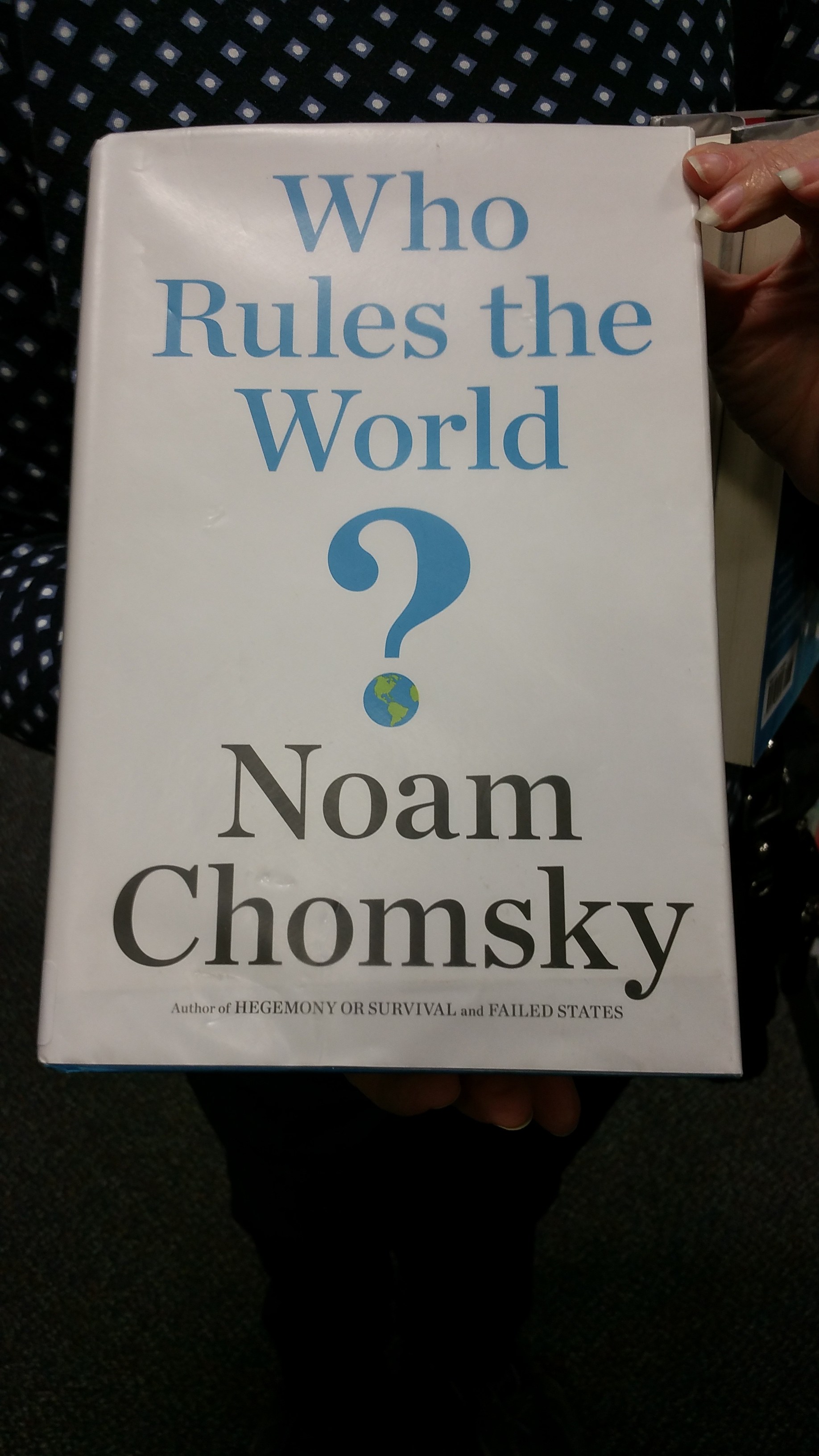
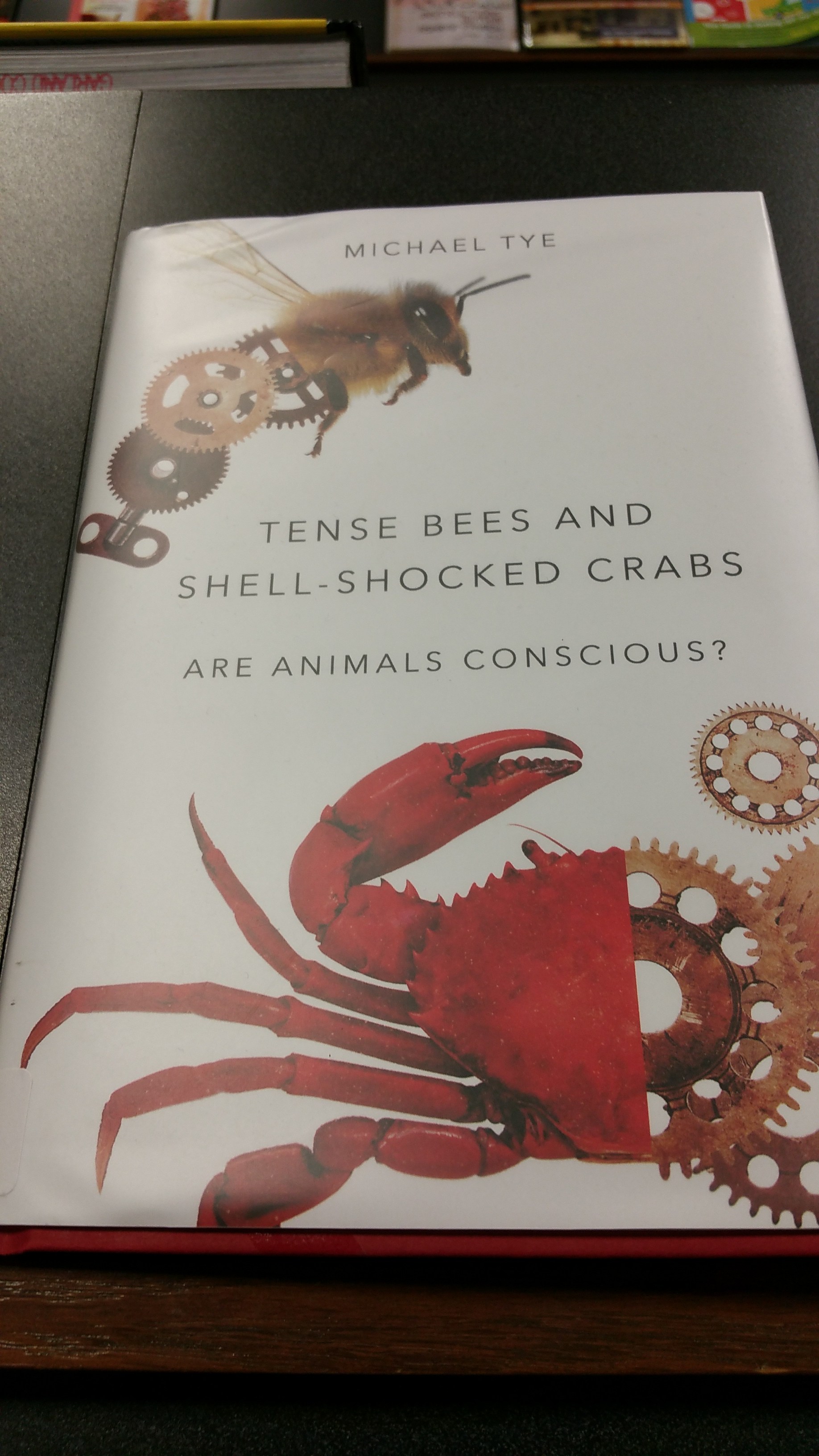
Visits to libraries frequently result in serendipitous discoveries. Such was the case a few days ago when my wife and I stopped at the Garland County Library to retrieve a few books she had requested by inter-library loan. While she was picking up her books, I perused the ‘new arrival’ shelves and found these two books. I wasn’t ready to check them out then, but they were sufficiently intriguing that I snapped photos of their covers. After reading about them this morning, I now know I will borrow them from the library soon. I find it interesting that, lately, I’m more inclined to read nonfiction than fiction. I suppose that will pass.

Posted in Books | Leave a comment

Does Anyone Know Where the Love of God Goes?

A couple of nights ago, while listening to the music of Gordon Lightfoot (who, by the way, is one of my favorite singers/songwriters), one song, If You Could Read My Mind, brought back memories I thought were long-since dead of a short-lived post-college crush. Every time I listen to his music, long-forgotten memories surface, memories that stick with me for days after I listen to the lyrics. So it was with the musical set to which I listened the other night. Another tune, in particular, has stayed with me from that night: The Wreck of the Edmund Fitzgerald. The lyrics to that song represent, in my opinion, among the best story-telling that’s ever been done. One line is especially haunting: “Does anyone know where the love of God goes when the waves turn the minutes to hours?” That line, alone, can turn a spigot to unleash a river of tears.

Well, as music sometimes does, Lightfoot’s tunes have been playing in my head since I happened to listen to a few tunes the other night. And when that happens, I go exploring, trying to learn more about the music and its creator. So, this morning, I explored a bit. I learned that Lightfoot was spurred to write the song, in part, after reading a Newsweek article entitled “The Cruelest Month.” I also learned that Lightfoot considers the song to be his best work. And I learned that he’s scheduled to perform in Dallas in a few days; March 10, to be precise. I wish I could go. But that’s not to be. I did hear see him perform once, though. I don’t remember precisely when, but I know it was at Jones Hall in Houston, sometime between the time I got married and the time I moved away in 1985.

Gordon Lightfoot is seventy-eight years old, so he has a limited amount of time left to perform (but so do we all); I hope he is able to celebrate his ninety-eighth birthday on stage, singing The Wreck of the Edmund Fitzgerald.

Posted in Music | 1 Comment

Within Earshot

Crushed emotions, spilling out in tears, flood an embrace as if interlocked arms were a dam and the space between two people were a reservoir. When the dam bursts, a lifetime of regret will flow like a river, drowning everyone in its turbulent depths. Anyone within earshot will succumb to the pain expressed in the torrent of sobs.

Posted in Uncategorized | Leave a comment

The Cleansing

Swift. Like a seasonal stream swishing down the side of a mountain after a spring downpour. That’s what it felt like. The world changed in an instant. The stream turned into a torrent and the torrent turned into a flood and the flood turned into a tsunami that drowned us in a putrid pool of excessive violence and seething hatred.

I stood beneath the executioner’s platform, watching the headless bodies crash to the ground below, impotent to scream in anger at the injustice to which they had just been subjected. None of those people deserved to die. None of them should have witnessed the last moments of their lives in terror, extinguished as the blade of the executioner’s sword sliced through their necks. But that was the time in which we were living. That was the New Middle Ages, the culmination of that ugly episode in human history that caused Sperling Infuria to argue, persuasively and with almost complete success, that humankind should be eradicated. Infuria asserted that, if allowed to survive, humanity would lead—as it always had—to unending suffering, ceaseless hatred, and increasingly monstrous acts committed in the name of one bankrupt political or religious entity or another. The only one with any significant influence over Infuria who rejected his arguments was his wife, Claudia Apollonia. And Apollonia’s repudiation of Infuria’s contentions led to what we now know as the Cleansing.

The earth’s population, today, is just under seven hundred million, less than one-tenth of what it was before The Cleansing. Schools today memorialize the terrors of the New Middle Ages in mandatory classes designed to inculcate in students an understanding of what happened and what could happen again if we were to fail to honor the Modern Creed and the behaviors it requires. But details of the Cleansing do not find their way into classes. In fact, the Modern Creed prohibits discussion of the Cleansing beyond acknowledging that it occurred and led to the peace we enjoy today.

One day I may tell you what I know about how the New Middle Ages ended. I may explain the Cleansing to you. But not now, because I wish to live more of my life before it is taken from me for breaking the prohibitions of the Modern Creed. Ach, there’s an Enforcer at the door, demanding to read my thoughts. Perhaps I will not tell you what I know, after all. And you mustn’t let them read your thoughts of this exchange or you, too, will fall victim to the Modern Creed.


Posted in Fiction, Writing | Leave a comment

Origins: of Cloth and Clothing

Have you ever wondered about the origins of clothing? Well of course you have. In fact, if you’re like me, the subject is on your mind this morning as you ponder the circumstances that triggered ideas that led to the making of cloth. I wonder when and where people began wearing clothes. Was the motivation to cover one’s body a matter of physical protection (e.g., avoiding sunburn, etc.) or was it something less rational (e.g., modesty)? Cloth. When was the first cloth made? What raw materials were used in its making? How were those materials spun together (or otherwise combined and/or connected) to form cloth?

These thoughts lead us (assuming you’re with me in this journey) to wonder whether there is a precise moment at which raw materials, when being combined/connected, become cloth? Before reaching the point of full transformation from raw material to cloth, would the not-yet-cloth be rightly called proto-cloth? If not, what would one call the unfinished assemblage?

Speaking of clothing and its relative degrees of completion, have you ever wondered about the phrase “fully-clothed?” How about the phrase “half-naked?” Do you hear what would, in my mind, be their natural corollaries: “half-clothed” and “fully-naked?”

Back to the origin of cloth. Was the original use of cloth to make clothing? Or was the original cloth used for other purposes, for example to make sacks to hold pecans gathered from the floors of pecan forests (or some other such use we rarely consider when wondering about the origin of cloth)?

I think it’s safe to assume the making of cloth and its namesake (at least in English), clothing, preceded written language. Otherwise, we’d all have read about the origins of cloth long before now. Unless, of course, there was some arcane prohibition against the use of language to describe the journey of cloth from cotton to clothing. I can imagine that only the select few were permitted to write and to read about the mysterious evolution of clothing:

In the beginning, Carmichael (for it was Carmichael) created a mighty clump of fibers. Now the fibers were formless and futile, so useless fibers covered the surface of the ground, and the mood of Carmichael was hovering over the fluff.

And Carmichael said, “Let there be cloth,” and there was—magically and without the aid of modern machinery and petroleum-based components—cloth. Carmichael saw that the cloth was good, and he separated the cloth from the abundant nakedness all around him. Carmichael called the cloth “clothing” and the nakedness he called “nudity.” And there came upon the gathered throngs a new emotion, which Carmichael called “modesty.”

I’m not saying that’s exactly how it went. But I’m not saying it’s not, either. You know, I want to be open-minded about it.

And that’s the odd place in which I find my mind wandering this morning.

Posted in Just Thinking | Leave a comment

And If I Die

I’ve stipulated it in my will. I have completed and filed my medical directives. I’ve done what I have been advised to do to tell my family and the medical professionals who might be present in what could be my last hours: do not keep me alive by artificial means. If the likelihood is high that I will not regain my ability to interact with and enjoy my family, let me go. If I would require attachment to a machine to keep me alive, let me die. If my quality of life would suffer dramatically, let me die. Or, if you’re truly a humanitarian and I refuse to die on my own, kill me as painlessly as possible and don’t get caught.

Tonight, I watched a documentary called Extremis. It made me sad to realize, while thinking through the film and the people who are NOT allowed to die with dignity, that some people are forced to live through unspeakable physical and/or mental pain to satisfy their survivors’ craving for closure or their delusion that God will step in to address the obviously erroneous circumstances surrounding a loved-one’s imminent demise.

If I Die. What an absurd comment! Of course I will. I hope that moment will be a while in coming. A long while.

Posted in Uncategorized | Leave a comment

Revelations in Writing

The urgency to write one’s story grows stronger with age, propelled by a growing acceptance that mortality is, indeed, real and applies to everyone. At the same time, the danger of revealing the deepest secrets and flaws argues against revelation. How can the doting old woman find it in herself to reveal to her grandchildren her torrid fifteen-year-long infidelity to her now-dead husband? How can the avuncular Kiwanian-of-the-year find the courage to expose the lechery and contemptible disregard for decency that defined his early years when he made unwelcome overtures to women who depended on him for their jobs? The flaws need not be so despicable to be painful, either. The octogenarian who harbors regret at accepting the proposal of marriage to her husband of sixty-five years has done no wrong, but will the idea of sharing that lifetime of doubt allow her to tell her story? Or will shame at her own regret preclude the story from being written?

I don’t know these people. I don’t know their stories. But as I listened to a speaker the other day, exhorting the audience to write through their pain and to tell their truth, I looked around the room and wondered what painful secrets the audience might be unable or unwilling to tell. I wondered whether there were, in that room, people whose pain and regret was so deep and so bitter that it would seal their stories forever in impenetrable tombs. No need to wonder. I am sure of it. I could feel it.

It occurs to me that memoirs are suitable outlets for writers whose lives are not vessels of regret and shame, whereas fiction is suitable for the rest of us.

Posted in Writing | Leave a comment

Nobody Knows the Trouble I’ve Been

Once again, I come to the conclusion that I do not need a pickup truck. Nor do I need a table saw, a drill press, a chop saw, or a shaper/planer. Not only do I not need any of these things, I have no place to put them so they would be out of the way. But the lack of need and space does not prevent me from wanting them.

Want. That is a strange emotion. If, in fact, that’s what it is. I suppose it is; after all, if you replace “want” with “desire” you have the same meaning. And desire is an emotion, isn’t it? Well of course it is. What, though, is the absence of desire? Is there a word for the emotion that fills the void left by the absence of emotion? The thesaurus does not help me with this inquiry; methinks the contractor responsible for the development and roll-out of the English language fell down on his/her job by failing to establish an antonym for want, at least one that satisfies the parameters I’ve set for satisfaction.

But, back to the truck and the accoutrements to fill the workshop I do not have. How is it that, though those items were on my list of “must have” when we considered moving to the Village, the house we selected does not have the appropriate space to accommodate them? What nincompoop allowed that oversight to occur? That would be me, I suppose. Such is life. Speaking of nincompoops, I spent all of five minutes on a “town hall” call with Senator Tom Cotton tonight. I had other things to do, so I did not press “star-three” to join the line of people who wanted questions answered. But the time I spent convinced me the questions were screened with some care, ensuring the telephone town hall did not present the Senator with discomforting questions. Based on what I heard, he used the town hall as a campaign rally to stoke the fears of his base and to attack President Obama. I hung up, wishing I could have spoken to the man directly. Though all that would have done, I am sure, would have been to cement my belief that he is spineless, self-interested, snake. I do not like Tom Cotton and I believe with all my heart that he does not give a shit about his “fellow Arkansans.” He is in the game for Tom Cotton. Solely.

Did I slip away from my lust-fest for trucks and tools? I believe I did. If you, whoever you are, read this post and decide you absolutely MUST do something to address my ennui, let me tell you how to accomplish that objective: provide me with: 1) a pickup; 2) a table saw; 3) a drill press; 4) a chop saw; 5) a shaper/planer; and 6) a legal way (that avoids jail time and/or execution) to remove from our lives the so-called President, all of his henchmen, and the obscenely partisan politicians of both major party stripes , allowing me to replace them with intelligent people whose goals are to make life better for all humankind and the planet and creatures upon whom we depend.

Speaking of delusional. I have not been watching the pretender-in-chief and I don’t intend to. The man lies more reliably than he breathes; I wish he would do less of the latter…much, much, much less.

Posted in Just Thinking | Leave a comment

Hydrophobia

A few days ago, as my wife and I were out doing a long list of errands, a thought entered my mind from nowhere. And I spoke about it to my wife. “Nobody seems to talk about hydrophobia anymore. I remember when discussions of hydrophobia were as common and predictable as the sunrise.”

I went on to explain recollections of conversations about hydrophobia, memories from my very early childhood in the city of my birth, where I lived only until I was five years old. Those conversations are ancient history, but I recall them. There was quite a lot of talk about hydrophobia back then.

My wife looked at me as if I were hallucinating. “Hydrophobia? Fear of water?”

Yep, that’s what I recollected it means. But my memories of the conversations suggest that hydrophobia was related to rabies. I asked her if she had never heard the term used in reference to rabies. “Never.”

So I inquired of Father Google, who offered some clues as to my recollections of hydrophobia and rabies. Father Google explained that hydrophobia is an extreme or irrational fear of water and that fear is symptomatic of rabies in humans. Further investigation revealed that hydrophobia used to be (and perhaps in some contexts remains) synonymous with rabies, perhaps because people who contract rabies have painful throat spasms when trying to swallow.

Now, I cannot recall the circumstances surrounding these very common discussions of hydrophobia. What might have given rise to those conversations and why, nearly sixty years later, did their memories pop into my head? I tried to find out by inquiring further of Father Google about hydrophobia and the city of my birth, thinking an outbreak of rabies in humans might have taken place in the city in my early years. My search yielded nothing. But further efforts revealed that, many years earlier, three Texans (two of whom lived in the city of my birth) had traveled to France so that one of them could be treated for hydrophobia by Pasteur. The patient, bitten by a wolf on March 9, 1888, was admitted to Pasteur’s institute on March 30. When the three men returned to New York City on May 6, 1888 they were, according to an article published in the New York Times the following day, firm believers in Pasteur’s treatment.  One of the men was Dr. A.E. Spohn of Corpus Christi, Texas. Spohn Hospital, now CHRISTUS Spohn Hospital, was named after the man.

None of this explains my recollections of common discussions of hydrophobia, nor why those memories popped up of late. But, in line with mining memories (which was among the topics of today’s Village Writers’ Club presentation by Janis Kearney), I thought I’d better write a little to help jog my memory. I had planned to write this post, anyway, but Janis’ comments made more emphatic my commitment to do it. And so I have. But, as you might have surmised by reading this far, I tend to get sidetracked when doing my “research.” But I do so enjoy wandering down those odd little rabbit holes.


Posted in Uncategorized | Leave a comment

Frigid

Sultry spring shrinks in horror as the glacial scream of dying winter rings in our frigid ears. The cerulean heavens rage with cold stillness in the brittle morning air. Even the certainty of summer becomes dubious in light of this brutal reminder that we are not in control of the weather, nor of our lives.

Posted in Uncategorized | 1 Comment

Stand Your Ground

Yesterday, I complained that Democrats are becoming Republicans, in terms of the tactics they use to denigrate the “other side.” And I still believe that and wish we’d focus on issues. But then, today, the psychopath-in-chief’s administration decided to begin the process of silencing the media. And my rage has skyrocketed to new levels. This time, the howls of protest from every part of the public, from ring-wing to far left-wing, are legitimate and deserve to be heard at full volume.

The thin-skinned psychopath and his henchmen decided today to “punish” some of the media they call “fake” by prohibiting them from attending a press gaggle, held instead of the usual news briefing that includes live cameras and the like. The first amendment’s protections specify that Congress shall not make laws that would abridge the freedom of the press. Perhaps it’s time to modify the Amendment’s language to clarify that the occupant of the White House, currently the psychopath-in-chief, and his henchmen also are prohibited from such breaches of freedom.

I have a theory that Sean Spicer, bruised and angry at how he’s been portrayed on Saturday Night Live, decided to avoid any TV cameras and some of the more aggressive questioners in the media during his conversation today with the media, eliminating a bit of the rich materials available to SNL. Whether that’s true or not, it’s not a legitimate reason to prevent the free media from covering the White House. Maybe the following adjustments would address the problem. First, of course, we must remove the cancer and the ugly nutrients that feed it.

Amendment I

Neither Congress nor any member of the Executive Branch shall make no laws, issue edicts, or otherwise take actions respecting an establishment of religion, or prohibiting the free exercise thereof; or abridging the freedom of speech, or of the press; or the right of the people peaceably to assemble, and to petition the government for a redress of grievances.

On an unrelated subject, I wonder if  “stand your ground” laws would offer protection for the people’s response to being robbed of their freedom?

Posted in Democracy, Dictatorship, Government | Leave a comment

Hiccup

I am afraid Democrats are behaving like far-right-wing Republicans. My email box and my Facebook feed are flooded with outrage and exhortations to Democrats to fight Republicans at every turn, just like the Republicans fought and obstructed and otherwise did all they could to upend the good work of President Obama. I understand rage. I understand anger at obstructionist pigs whose motives and tactics are driven purely by politics and oblivious to reality. But I am angry at my Democratic compatriots for becoming the monsters they so demonized. I still believe the majority of Americans will, if given the chance, respond to reason and well-founded and properly articulated policy positions based on humanitarian ideals. But unless Democrats lower their (and my) blood pressure, the current state of affairs will just grow worse. Republicans and many independents will look at Democrats as the obverse side of the ugly Republican coin. Rather than scream and harp at how horrible the Republican actions are, I think a more reasoned approach is in order. Clearly articulate (and footnote) the errors, lies, and omissions of Republican policies and policy arguments. But don’t shout; just provide evidence. Over and over and over and over again. Eventually, the more intellectually inclined opponents will realize they have been mislead by orange lies and Republican distortions.

Just as important (or, in my opinion, more so) as the counters to Republican administration lies is the clear enunciation of progressive positions. And here’s where it gets dicey; how we PAY for our positions. Not with Republican-style BS, but with reasoned and deeply considered facts. And if we don’t seem to have a means of paying for a position, then let’s openly admit it and have a debate as to whether it merits implementation even in the face of a lack of obvious funding. And let’s stop focusing exclusively on the middle class; one’s mere positioning in the middle class puts him or her far ahead of the poor. Let’s talk about how we’re going to lift the poor out of poverty, not simply how we’re going to feed and clothe them during the experience. Let’s talk about how to give people skills they need to pull themselves up out of poverty. And let’s acknowledge that there really are some people (albeit, in my view, a tiny fraction of recipients of welfare) who game the system; and let’s figure out a way to catch and remove them from the system without punishing the decent people who are trying and simply need a hand.

I am not softening on the so-called president or his supporters. I have no delusions about changing 45’s positions; you can’t cure incurable mental illness that has progressed as far as his has gone. But reasonable people who respond to 45 because they hurt and don’t feel Obama helped them (though I cannot for the life of me understand that attitude, given what he inherited and what he left us, but that’s another story), deserve to be given an opportunity to learn. And to ventilate. And we, too, deserve to ventilate. But at some point, we have to grow up and realize our ongoing expressions of rage are simply going to energize the worst of the opposition.

I am liberal, progressive, left-leaning. But I pride myself on avoiding the embodiment of those labels to the point of insanity. Moderation, compromise, and regular articulation of positions will get us, and the world, a lot more bang for the buck than will 45-like tantrums.

Do I change my position regularly, switching between reasoned moderate and maniacal left-winger? Yes. But I always come around to one or the other position again, when the time is right.

Posted in Politics | Leave a comment

Harbingers of Sprummer

It is, of course, too early for Spring to have arrived. But temperatures reminiscent of late Spring and even early Summer suggest a change of the season and trees have begun to blossom, yielding to the onslaught of unseasonal weather. Yet the chill in the morning air, though not a winter chill, acknowledges Mother Nature’s efforts to retain her frosty attitude about climate change. She doesn’t like it. Nor do I. A late winter, flush with heat and temperatures approaching 80F, foreshadows the potential for a volcanic summer. I wrote a weather forecast, in jest, a year or five ago predicting tornadic straight-line wind thunderstorms with hail stones the size of cars raining down on North America, followed by daytime high temperatures climbing above one thousand degrees and nighttime lows dipping to near absolute zero. Perhaps that tongue-in-cheek forecast, while absurd, wasn’t so far-fetched after all. I read something yesterday that noted in matter-of-fact language that earth’s sun will, predictably and with a great degree of certainty, die in the far distant future, eliminating all life on Earth in the process. I think humankind is doing what it can to expunge Earth of life long before that eventuality comes to pass.

Posted in Uncategorized | Leave a comment

Recognizing Bias

When I write, whether fiction or essay or poetry or memoir, my intent is to write honestly. The challenge to writing honestly is two-fold. First, writing honestly requires the writer to both know truth and how to tell it and, second, the process exposes the writer to attacks for precisely the reason that he is who he is. If a writer wants to protect himself from withering attacks for his beliefs, he best not share them. If a writer wants to avoid giving readers the opportunity to use shame, guilt, and blame as tools against the writer (or as as excuses for the reader’s misfortunes), the writer either must not write or must not share what he has written. I choose to write, share what I’ve written (but not force anyone to read it), and express my opinions honestly. When I recognize them, I acknowledge my biases; even when I’m not sure bias helps shape my opinions, I try to examine my thoughts, with an eye toward finding hidden biases.

Bias, though, is not intrinsically evil. Bias offers a protective shield against a world gone awry. Bias alerts us to dangers that we may not even understand. We ought to listen to our biased reactions to the world in which we live, because those reactions can express truth we’d rather not know. So, what does that mean? Bias is good? No. Only that bias is a filter that offers us a warning. The warning may, indeed, be one directed outward to ugliness in our environment. Or, it may be directed inward, warning us against ourselves, against the imperfections within us that threaten our humanity.

The real threat of bias is that it tends to push us toward the fringes of belief. Bias pressures us to take an “all or nothing” stance on matters that, in the final analysis, don’t matter. Bias pushes us to take positions when we’re perfectly satisfied with ambiguity or undecided. Or when we’re too afraid to speak out on matters that, in our judgement, don’t warrant the risk that speaking out entails.

I think I may have crossed the threshold of being unwilling to put up with any of this anymore. If so, I will slink away without bravery or cowardice; I will just slip away. I’m tired of hatred and fury and suspicion and distrust. My principles won’t allow me to cave in to the times; they require me to slide away with a rage that no one hears. There’s no good reason that we’ve become what we’ve become; the only reasonable explanation is that humans are unworthy of their place on the planet. That is a position I can embrace with what little passion is left.

Posted in Uncategorized | Leave a comment

Bogata

This set of interrelated vignettes sprang from my fingers with little prodding. I don’t know the whole story here; not even the main parts of it. But I know there’s a story beneath this scenario. I know there’s more than a vignette here; perhaps I have, indeed, found a piece of a story that will call out its brethren to form a whole. I’m not going to rush it, though. I have to allow myself to think through the before and the after, the beneath and the above, the injury and the salvation, the bondage and the escape. This beginning may actually build upon itself in ways of which I’ve only dreamt heretofore. But, of course, the possibility exists that these may be the final words of Clamber and Decker. I hope not. I sense there’s something here that begs to be written.

The volume of Clamber’s voice rose with each sentence, each syllable, until the last word sprang from his mouth as a scream.

“Why did you leave me in that godforsaken town, of all places? Couldn’t you have taken me to Dallas? Or Texarkana? Or anyplace with more people and more options?”

The old man shrugged and shook his head. The movement appeared to say “I don’t know.” But he didn’t speak. Instead, his chest heaved and stuttered; his body convulsed in a silent whimper, followed by another and another until, finally, audible sobs escaped his mouth and tears ran down his cheeks.

The anger in Clamber’s face softened as he watched his father cry. The shake of his head mimicked his father’s a moment earlier.

“I know you’re sorry for it, Pops, but I don’t know whether I can forgive you. I’m not even sure I ought to try. But I guess I will. So, yeah. The answer is yes. I’ll help you to the extent I can.”

Clamber Scoggins was fourteen years old , alone, and homeless when he started what would become an empire. He had been abandoned by his father, Decker Scoggins, at the Quick Stop gas station and convenience store in Bogata, Texas.

The abandonment was mildly civil, if such a thing can be said about leaving a child alone to fend for himself. Describing the desertion as civil is especially troubling because the act was done in a place so decidedly unfriendly to unattached children. Bogata, Texas, population twelve hundred, more or less—fifteen miles from, Clarksville, the county seat of Red River County, one of the poorest counties in Texas. Kids don’t do well in Bogata schools, nor in Bogata workplaces.

But leaving a child in Bogata doesn’t necessarily mean a child will stay in Bogata.

The boy Decker Scoggins left in Bogata, Texas was ungracefully thin and, at five feet two inches, short for his age. His dishwater blonde hair spilled in untrained layers over his ears, collar, and forehead, its haphazard asymmetrical cut suggesting an untrained home barber’s work. Clamber’s face was thin and, except for the natural smudges that build during days without washing, pale. Like his father, his eyes were big and brown and brooding, but unlike his father’s his eyes hid behind a pair of plastic, round-rimmed eyeglasses.

The elder Scoggins explained to his son what he was about to do.

“Clamber, I just can’t keep you no more. I’m leaving you almost all I got in the world, nearly five hundred dollars, so you can feed yourself while you look for somebody else to take care of you.

“I hate to do it, boy, but I just got no other choice. Here, this here money is for your front pocket and the rest is for the money belt I give you.”

Decker reached into the threadbare right rear pocket of his ancient jeans and drew out an old, faded, scarred wallet—the kind truckers carry; long, with a chain attached—and opened it. He pulled out a twenty-dollar bill and a thick, wrinkled envelope. He stuffed the bill in the left front pocket of Clamber’s faded jeans and handed the boy the envelope, which contained the remaining four hundred and seventy-one dollars.

Clamber stood holding the envelope, his head cocked slightly and his confused eyes searching for something to explain this odd interchange. He stared at his father. Decker stared back for several seconds, as if waiting for a reaction. When there was none, he continued.

“Come on, boy, put the rest of the money in the money belt before anybody sees you got it.”

“You’re gonna leave me here?”

“I told you, boy, I just can’t take care of you no more. I want you to find some nice family to look after you. Somebody don’t know me or my history.”

Now, if you or I were in that kid’s shoes, we would have started bawling our eyes out. But Clamber Scoggins, his bewildered gaze morphing into a look of acknowledgement, remained fixed on the man. His eyes betrayed no emotion; but if a boy’s vacant eyes could tell a story, his told that he understood and accepted what his father said.

“All right, then. I guess I better start looking for a place to be.”

With that, the boy turned and walked inside the convenience store. His father climbed into the cab of a chalky grey 1993 Ford F-150 pickup that once had been blue, now coated with dull orange dust, and drove off in the direction of Mount Pleasant.

Clamber turned and stared out the dirty window until his father’s truck disappeared from view.

“This the place to catch the bus?”

The clerk behind the counter, a thick and heavily-pimpled girl of no more than seventeen looked at him with dim beige eyes. “Yeah.”

“You got a schedule sayin’ what times the bus comes and where it goes?”

“Yeah. Look behind you on the wall.”

Clamber turned around and saw the bus schedule. His options were limited; the end of the line for the TRAX bus service appeared to be either Paris or Mount Pleasant.

“I’ll take a ticket to Paris on the 12:25 bus. It gonna be on time?”

“It usually is. You’ll know soon enough. Should be here in about thirty minutes. That’s three dollars.”

Clamber fished the twenty dollar bill from his jeans pocket and handed it to the clerk.

“Here’s your ticket and seventeen dollars in change. Anything else.”

“Nope.”

Clamber went back outside and leaned against the building. Forty minutes later, a transportation van, not a large bus like Clamber expected, arrived. After sorting through his confusion over whether this was his ride, he climbed inside and headed toward Paris. Clamber’s brief midday visit to Bogata that day was his last one as a poor boy, but not his last one as a foundling.



Posted in Fiction, Writing | 1 Comment

Legacy

I’ve reflected on a number of things during these last few days, not the least of which is my legacy, or lack thereof. People with children might consider their children their legacy, but I have no children. People who build big, successful businesses structured to live on after them might consider the business their legacy, but I shut my business down and sold its assets so I could retire. People whose work has long-lasting positive effects on society or institutions might consider that work their legacy. But I think the vast majority of the rest of us who cannot point to children or businesses or impactful contributions to society have to come to grips with the fact that we may leave no legacy. That thought conjures up a recollection of something I wrote several years ago that included reference to what was described to me as a Jewish saying; it went something like this: “You die twice, once when you take your last breath and again when your name is spoken for the last time.”

The idea of a legacy is one that bothers me just a bit because it suggests (to me) leaving behind a timeless presence. How many people (or legends of people) in the history of humanity have, truly, left behind a timeless presence? Shakespeare? Yeah, probably. Plato? Yep. Aristotle? All right, yes. Jesus? Yeah. Einstein? Yep. Edison. Yes. Buddha? Yes. Okay, there are a bunch. But “a bunch” constitutes an infinitesimally small fraction of all of the people who have lived on earth. Most of our forebears are gone and utterly forgotten. Many of them, among them great philosophers and inventors, are just a whisper away from oblivion. How long will Cotton Mather’s legacy last? Speaking of cotton, will recollections of Eli Whitney’s name and his contributions to cotton’s place in the United States’ eighteenth and nineteenth century economies be eternal? What I’m suggesting here, of course, is that a legacy is a rarity and is, more often, a short-lived fable. But, still…

And that leaves me with my legacy. What do I want it to be? What CAN it be? The only thing left for me to leave as a legacy is my writing. My writing is the only “thing” of mine, truly mine, that has the potential of living beyond my last breath. And, so, I am thinking these days of how I might increase the odds of that happening. Still, though, it seems arrogant and egotistical to even think about such a topic. And maybe that’s exactly it. A legacy of arrogance and ego. This is not improving my attitude, not in the least. Maybe later, when I get home from a willing obligation, I will have a glass of wine and wonder whether I want to pursue this avenue of exploration, after all.

Posted in Uncategorized | Leave a comment

Target

I plunge into the underbrush, slashing at chest-high weeds in the choking thicket, my machete in hand. Long since dulled against reeds and briars, the knife’s once razor-edged blade makes it more useful as a club than a sickle. The noise of cold steel rustling through dry grass and snapping brittle branches muffles the sounds of insistent legs thrashing through the path I’ve created behind me. But I hear those boots crashing through the bramble, muted though they are by my own frenzied progress. As the sounds of my pursuers grow louder, I stop to listen to their voices.

“Go ’round to the left, by the creek. You can move faster on the banks. Get in front of him and cut him off; I’ll close in behind.”

“Right. When you get to him, don’t shoot if you can help it. Do it quietly.”

I gently slither off the path I’ve created, into the thick grass away from the creek. I wait as the one closing in behind gets closer. My cudgel will slam into his forehead the moment he reaches the end of the path I’ve made for him. And, then, his gun will be mine. And his partner will be my target.


Posted in Fiction, Writing | 2 Comments

More Emptiness

Emptiness is palpable. Its evidence inhabits every crack and crevice, every nick in an otherwise smooth surface. Negative space is the phrase artists use to describe the way space around or between objects define them and render them in multiple perspectives. But negative space is emptiness. It is matter turned on its head; it is the absence of substance. Lifetimes comprise the absence of emptiness. All the intricate pieces—the interwoven substance and experience and the web of interpersonal interactions—form cloth we drape around the cage within which we reside. But between those pieces are shreds of emptiness we didn’t even know were there. Hidden in that woven collage are conspicuous gaps, gaps we don’t want to see. We hope to remain blind to them; to keep them at bay. But emptiness is palpable. At some point, light penetrates that comfortable darkness with such brilliant clarity that every negative space casts a shadow a lifetime long.

I wrote of negative space a few months ago. It meaning has not changed since them; it presence in the form of emptiness has only become more precise, more clearly defined.

Posted in Uncategorized | Leave a comment

Sudden Changes

Sudden shifts in my plans are nothing, not when those shifts are launched in response to massive dislocations in others’ lives. My wife and I had spent a very restive night at the Best Western Premier in Bryan, Texas, thanks to extremely thin walls and very loud neighbors; they were brothers who had loud voices and little need for sleep. After that unhappy night, we were on our way to visit my brother an hour or so drive away when I discovered that I had a voice message on my cell phone. It was a friend and former sister-in-law, explaining that her husband had suffered a major health trauma the night before; she asked us to call. The call had come in two or three hours earlier, but my phone is not reliable and, so, we did not know she had called until I just happened to check messages. I pulled over and returned the call; I got voice mail, so I left a message. I learned later she was with her husband, trying to keep him from pulling out IVs and the like in  his medicated state.  Shortly thereafter, I received a call from my niece, who said she was on her way to be with her mother. I allowed that we would return home if things looked like we might be needed. I would have turned and headed right home, but the previous night’s sleeplessness had resulted in our move to a new room when we got up that morning, and all our belongings were in the new room. Plus, we were heading to see my brother for a short visit. We decided to continue the visit.

A couple of hours later, we were on our way back to Bryan. Our plan was to visit the George H.W. Bush Presidential Library. We did. But we kept in touch, via traded messages. And we had another commitment, with other friends, in Tomball, for this morning. So we decided to stay over last night, zip over to Tomball, visit with friends, then head back to Hot Springs Village. And we did all that. Tonight, we are home; tired, beat, weary, but in far better shape than my friend. So, tomorrow I hope to visit him and offer some support and solace to his wife. I look forward to the time when this is an uncomfortable memory; when everything that caused the shift in plans is a memory with little import. That’s what I look forward to and hope for. But, life can change in an instant. Sudden changes can be wonderful or they can be catastrophic. These lessons matter.

Posted in Philosophy, Wisdom | Leave a comment

Yesterday’s Adventures

Last night, I indulged my newly-acquired affinity for Dutch crime dramas by watching the second component of the Department Q trilogy. Last evening’s treasure was entitled Department Q: The Absent Ones. Like the first in the series, the troubled and troublesome detective rips into cold cases with abandon. I enjoyed the film quite a lot; if one hasn’t seen the first one, though (Department Q: Keeper of Lost Causes), though, I would recommend watching that one first.  The next, and final (as far as I know) film in the series is entitled Department Q: A Conspiracy of Faith. I suspect I will be equally enamored of that one as I have been with the first two.

I was unaware of Jussi Adler-Olsen, the author upon whose international bestselling books the series is based. Having found the two films based on his Department Q series so engrossing, though, I think I’ll have to explore his books. Others in his Department Q series include: The Purity of Vengeance; The Hanging Girl; The Marco Effect; Guilt; Mercy; and Buried: Book 5. I’m concerned that I might be engrossed in the films due to the characters’ acting abilities and the allure of reading subtitles while watching Danish language films; the stories, on reflection, are not particularly riveting. I suppose the flaws in the main character (whose name is Carl Mørck, played by Nikolaj Lie Kaas) appeal to me because they describe or are quite similar in many ways to a few characters I’ve written and others who reside fully developed in my head. And the appeal may rest, in part, in the fact that Mørck is assisted in his efforts by Asaad (Fares Fares), who is (either I assume or learned in The Keeper of Lost Causes, I’m not sure which) a Middle Eastern immigrant. For whatever reason, I’ve become enamored with the Danish film series. I know I’ll watch Department Q: A Conspiracy of Faith; I have it on my ‘saved’ list on Netflix.

Aside from last night’s film fest, I experienced a full twenty-four hours. Yesterday started when my alarm ripped into my dreams at 5:15 a.m. (I had to set an alarm, just in case), alerting me to the fact that I needed to arise so I could take my neighbors to the airport in Little Rock. Following the drop off, my wife and I had breakfast at a place I believe is called Dan’s 1-30 Cafe.

Then, on our return, I left my wife at home while I went to the church I sometimes attend to listen to discussions about the possibility of engaging a new part-time minister. I succeeded in keeping my opinions largely to myself (I am not a member, therefore do not feel it is within my ‘rights’ to object to anything the organization does). But I did ask a question: how different have the ‘worship’ services been under a minister (the developmental guy they hired last summer) compared to the services organized by the church leadership? It did not surprise me to learn that several members support the idea of a minister because it reduces the work load on volunteers; but there were other reasons, as well, all legitimate, I think…just not convincing to the biased guy living inside my head. Were I a member of the group, I might have expressed my opinion that neither worship services nor a minister have any appeal. But probably not; that discussion took place before I started attending with any frequency. I suppose I’ll just sit back and continue to enjoy the ‘insight’ services and appreciate that the organization allows atheists to participate.

Upon my return from the congregational conversation as they called it, I again attacked the encroaching forest behind my house. With hand trimmer in hand, I snipped vines and branches, hoping to smooth over an unruly landscape. My efforts, though valiant, were insufficient to make a dent in the appearance of the tiny strip of land upon which I invested my efforts. Clearly, I will need to devote an entire day, perhaps an entire summer, the the chore. After I successfully fight back the hideous plant life, I’ll need to hire someone to help me by bringing in Visqueen and gravel and rock and pine bark mulch, along with youthful energy, to beautify the landscape and limit the forest’s invasion. None of this will continue this morning, though, as I will return to said building to church building engage in fellowship with others who may or may not share my nonreligious perspectives on life.


Posted in Uncategorized | Leave a comment

Submission

Finally, after years of procrastination, delays, excuses, and other such “reasons” to explain the causes for my slothfulness, I am about to submit a short story for consideration for both a prize and publication. Though I have long wanted to, intended to, and planned to submit some of my writing for consideration to be published, I just haven’t done it. I suppose the bottom line reason is this: I’m lazy. Once I write something, the idea of editing it, polishing it, and going through the process of submitting it to an editor just turns me off. Perhaps it’s not just laziness, though; perhaps it’s the fear of rejection. But I really don’t think so; I think it’s because I’m a laggard. I really don’t worry much about being rejected; I expect it. Which probably explains my reluctance to go through the effort to put the stuff in front of someone who has the wherewithal to accept it for publication. What’s the point, after all, if the expectation is rejection? But, if I’m ever going to get anything published, I guess I have to start by submitting it for review. So, before the end of next week, I’ll finish the process of polishing and will follow the rules for submission. I wonder whether that will have the impact of breaking my slothful track record? Time will tell. I owe Maddie for the gentle nudge that got me off my duff.

Posted in Writing | 1 Comment

The Wild Hairs (or is it hares?) of the Forest Floor

I spent a good three hours blowing leaves again today. Well, much of the time was not spent blowing leaves but, instead, extracting the leaf blower’s extension cord from beneath boulders. I would not be surprised to discover my time dedicated to leaf blowing cut in half if I were to invest in a gasoline powered blower. But, no. I bought a new extension cord, instead; it was cheaper. Some days, I believe my miserly ways are genetically driven; I have no power to overcome them. But the equipment is not the issue here, is it? No, of course not.

The issue is the frequency, or lack thereof, of my engagement in what, until I moved to the Natural State, was known as yard work but, in light of where I live, is now known as forest control. Today’s paltry three hours constituted the proverbial drop in the bucket compared to the amount of time I really should have spent “spiffing up” the yard. In fact, if I were to spent three hours a day for the next thirty days, I would make only a moderate dent in what needs to be done. I actually rather enjoy working outdoors (and indoors, as in remodeling, etc.), but I recognize my limitations of skill, physical capacity, financial wherewithal, and (in the final analysis) drive. But what I could do if I had an eager and physically fit helper! Ach, that is not to be. So I will continue to chip away at the needed yard work, with the objective of finishing the required tasks in the second quarter of the twenty-eighth century.

Regardless of my inadequacies today in forest control, I feel like I got quite a lot done. The front forest floor looks decent, except for the visible black Visqueen that looks like the front forest floor has open wounds in need of tending. Actually, what those open wounds need is pine bark mulch to cover them. If I had convinced myself last week to buy the gold-colored Ford Ranger truck I desperately wanted, I could have gone out today and filled the bed with much-needed mulch. But I allowed myself to be swayed by my wife’s pleading eyes; I abandoned the truck, even though I’m convinced I could have bought it for less than $8,000. Ach! I suppose I can pay for a lot of mulch delivery (and forest control work) with that kind of money. But paying someone else will not give me six-pack abs. I need to remember that, in case I need it next time I get a wild hair to buy a truck (which could happen at any moment).

Posted in Uncategorized | Leave a comment

Evidence

Evidence is merely a hindrance to alternate realities offered as facts,
an obstacle to be overcome in search of support for bias and lies
and ill-will in the name of power.

Evidence gets in the way of highly developed incompetence,
the sort of polished ineptitude presented with fanfare at
the blowing of trumpets for a psychotic monarch.

Evidence is an inconvenience, a beacon of unwelcome light, an ugly
illumination of jaundiced ideas cultivated under the approving
gazes of mentally anesthetized but willing slaves.

Evidence is meaningless in a rancid kitchen where the rotting
corpses of heroes are eaten in defiant acts of bigotry
disguised as rabid patriotism.

Evidence skirmishes against fallacy, falling victim to gas-lighting;
the obedient subjects agree: evidence deserves to be relegated to the
dark, dingy corners where truth goes to wither and die.

Evidence, unwilling to succumb to tampering, struggles to take another
breath and make another effort to reveal the lies; will evidence expose a final
opportunity for an insurrection of righteousness to prevail?

Posted in Poetry | Leave a comment

Keeper of Lost Causes

There is no question: I have become enamored with Danish crime films. Tonight, I watched Department Q: Keeper of Lost Causes, a gritty thriller in which a troubled and troublesome homicide detective is punished for his bad behavior, after having been shot and nearly killed in a confrontation, by being assigned to a two-person department responsible only for sorting out and filing details about “cold cases.” The first case he selects is gripping, in the extreme, and commands the attention of the remainder of the film. After having watched the film, I went nosing about for reviews. I found this one, which I think offers the perfect synopsis and assessment. As I was reading the review, I got excited when I learned that the film I watched tonight is just one of a trilogy; perhaps I will seek out the remaining triplets tomorrow.

Posted in Film | Leave a comment